

With the popularization of the concept of refined pet feeding, Probiotics have become a common component in pet dog nutritional supplements. However, many brand manufacturers still have blind spots in the selection of strains, labeling norms, and key control points in the Production Process when developing products. Sorting out the common microbial categories in Pet Probiotics, understanding the core value of strain information, and clarifying the key matters that brand manufacturers need to confirm with the factories are the basis for creating compliant and effective pet probiotic products.

At present, there is a clear directory of Probiotic Strains that can be used in pet food in China. In practical applications, the most common probiotics in pet dog nutritional supplements mainly fall into the following categories:
This is one of the most widely used probiotic categories. Common strains include Lactobacillus acidophilus, Lactobacillus plantarum, Lactobacillus casei, and Lactobacillus rhamnosus. Lactobacillus mainly produces lactic acid through fermentation of carbohydrates to lower the pH of the intestinal tract, thereby inhibiting the growth of pathogenic bacteria, and has regulatory immune and anti-inflammatory functions. Among them, Lactobacillus acidophilus has significant effects in improving pet digestion and absorption and reducing the number of Escherichia coli in feces.
Bifidobacteria are obligate anaerobes. Common strains include Bifidobacterium animalis, Bifidobacterium longum, and Bifidobacterium breve. They can ferment dietary fiber to produce short-chain fatty acids (such as butyric acid), providing energy for intestinal epithelial cells, improving fecal quality, enhancing immune function, and repairing the intestinal barrier. However, bifidobacteria are sensitive to oxygen and temperature, and their stability is poor during processing and storage. They are usually suitable for powder, ointment, and other supplement forms.
Representative strains of this category include Bacillus subtilis and Bacillus clausii. Their greatest advantage is that they can form endospores, thus having strong tolerance to high temperatures, stomach acid, and long-term storage, and even being able to withstand a short-term temperature of 120°C. This makes them have application space in extruded pet dry food. After entering the intestine, Bacillus can consume oxygen, creating a survival environment for anaerobic beneficial bacteria (such as Lactobacillus and Bifidobacterium), and secreting exogenous enzymes such as protease and amylase to help improve the digestibility of nutrients.
Streptococcus faecium is a common type of enterococcus in pet probiotics. It has good tolerance to acid and bile salts and is often used to alleviate pet diarrhea and enhance intestinal mucosal immunity. However, it should be noted that some enterococci may carry transferable antibiotic resistance genes, so it is crucial to select strains that have undergone strict safety assessment and have no risk of resistance.
In addition, yeast-like probiotics such as Saccharomyces boulardii and Saccharomyces cerevisiae are also occasionally found in pet nutritional supplements, and they have certain effects in enhancing immunity and regulating the intestinal microecology.

Many brand manufacturers only label "Lactobacillus acidophilus" or "Bifidobacterium" on product labels, which is far from enough. Strain-level information is the key to distinguishing product quality and efficacy.
Strain numbers are like "ID cards". Even within the same strain, the functions of different strains may vary significantly. For example, although Lactobacillus rhamnosus HN019 and GG strain belong to the same strain, their adhesion properties and immune regulatory effects are different. Studies have found that strains from humans may have less adaptability to the intestines of canines than canine strains, which further highlights the importance of strain source and specific screening. Therefore, a complete strain number (such as "Bifidobacterium animalis Bb-12") should be labeled on the label, and the patent number of patented strains should also be indicated. This is not only an industry standard requirement but also the basis for traceability of product efficacy.
The number of viable bacteria is the guarantee of efficacy. According to the group standard "General Rules for Probiotics in Pet Food", within the Shelf Life, the viable count of probiotics should be no less than 10⁶ CFU/g (mL). Brands need to pay attention not only to the viable count at the time of factory production, but also to whether the factory can provide stability data within the shelf life, as this directly affects the actual viable count of bacteria in the product when consumers purchase it.
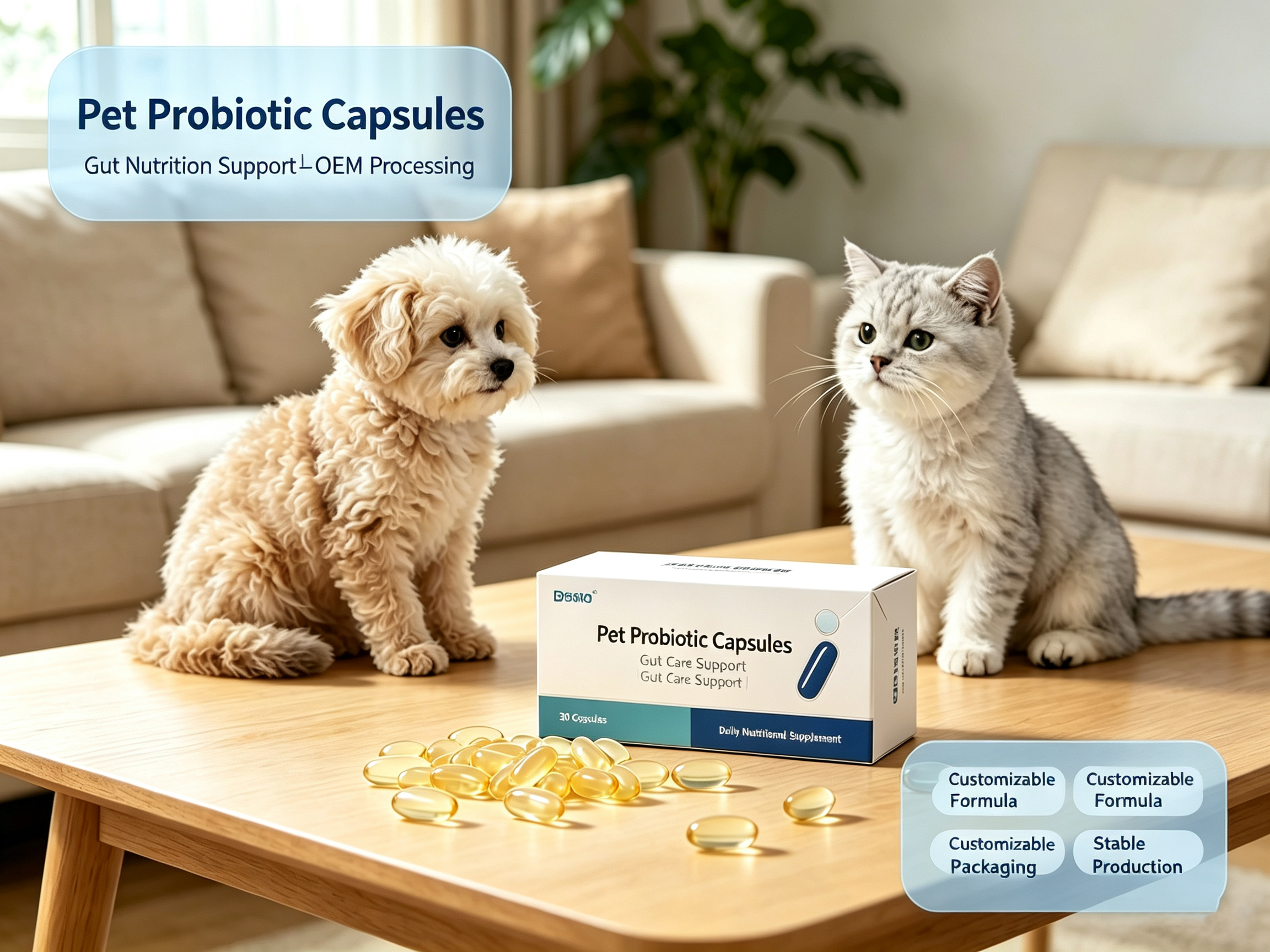
When brands entrust factories to produce probiotic products, the following steps must be clearly confirmed with the factories:
Confirm that all strains used by the factory are within the scope allowed in the "Feed Additive Catalogue". At the same time, require the factory to provide the origin history, screening records, and preservation archives of the strains to ensure that the strains have a clear "origin" rather than cheap bacterial powder with unknown sources.
Require the factory to design labels strictly in accordance with regulations. The labels must indicate the Chinese name of the strain (strain), strain number, viable count, and ensure that the strain number matches the actual added strain. In addition, if the product is in powder form and needs to be mixed with water for consumption, it should indicate the recommended water temperature range; if pets are taking antibiotics, it should remind of a 2-hour interval before use.
Require the factory to provide stability test data of the product under the indicated storage conditions. The viable count of probiotics will decline over time and under storage conditions, and the factory is responsible for verifying and committing to the viable count within the shelf life meeting the standards. At the same time, it is necessary to understand whether the factory uses encapsulation, microencapsulation, etc. processes to enhance the gastric acid and bile salt resistance of the strains, which has a significant impact on the colonization rate of the product in the pet's intestines.
Probiotic products have high requirements for the temperature, humidity, oxygen content, and hygiene conditions of the production environment, especially for anaerobic bacteria such as bifidobacteria. On-site inspection is required to confirm whether the factory has the corresponding production conditions and quality inspection capabilities to avoid significant loss of viable bacteria due to production pollution or improper processes.

When choosing a contract manufacturing partner, the research and development background and production qualifications of the factory are crucial. Kalo Biotech, relying on its group's over 20 years of research and production experience in the human health industry, has transferred its mature quality management system to the pet nutrition field. Its factory has multiple intelligent production lines for powders, tablets, soft capsules, etc., capable of meeting the one-stop needs from Formula Development to finished product Packaging. For probiotics, which have extremely high requirements for process stability, Kalo Biotech's professional accumulation in strain screening, formula design, process validation, and compliance label review can provide reliable implementation guarantees for brands.
WhatsApp: +8613455471839
Email: sales@koalapetbio.com


This website uses cookies to ensure you get the best experience on our website.



 Phone
Phone
Comment
(0)