

When many brands first approach a manufacturing company, they immediately ask "How much does this cost?" After receiving the quotation, they find it significantly different from their expectations. This process wastes a lot of time. In fact, the problem does not lie in the quotation itself, but in the insufficient information provided during the inquiry - the factory does not know what you are making, where you will sell it, or what specifications are required. Therefore, they can only provide the most common solution, resulting in a large deviation and it is inevitable.
If you clarify the following fifteen questions before contacting the factory and send them to them, you will find the communication much smoother and the quotation much closer to the actual cost.
Common channels include: Amazon, Chewy, Petco, Walmart, Target, Costco, as well as European companies such as Zooplus and Pets at Home. Different channels have significant differences in product requirements. For example, Amazon pays more attention to UPC codes, A+ page content, and Compliance labels; Chewy and Petco, etc., professional pet vertical platforms, have higher requirements for ingredient transparency and test reports; Costco, Walmart, etc., large supermarkets, will pay extra attention to Packaging specifications, outer box size, and barcode scanning compatibility. Informing the factory which channel you want to enter will enable them to determine if the formula, packaging, and document prEPAration are compatible.
If selling both online and offline, the packaging design should take into account the needs of both sides. Online channels usually require complete packaging information and good transportation resistance; offline shelf channels need to consider display effect and secondary packaging for the outer box. If the online main promotion is single bottles, and the offline main promotion is multi-bottle gift boxes, the price differences for the two packaging lines also need to be clarified in advance.
The overseas market has clear stratification - large supermarket channels (such as Walmart, Costco) consumers value cost-effectiveness; buyers on online professional platforms such as Chewy, Zooplus, etc., are willing to pay a premium for concepts such as "natural", "organic", "human consumption grade"; customers of independent pet stores tend to be more picky about quality. This positioning directly affects the raw material grade, packaging selection, and cost structure, and it is essential to clearly inform the factory.

The nutritional needs of cats and dogs are different. For example, cats need taurine while dogs do not; there are also differences in the tolerance range of vitamins A and D. Many raw materials have different absorption rates and safety levels in Dogs and Cats, and this must be clearly stated during the inquiry.
The nutritional ratio varies for different age groups. The Joint Formula for elderly dogs and the immune formula for young cats are completely different. The factory must adjust the formula when making it based on the corresponding adjustments.
For example, joint care, hair care, gastrointestinal regulation, urinary health, immune enhancement, etc. The effect direction determines the selection of core raw materials - if you want to do joint health care, you need to consider Glucosamine, Chondroitin, UC-II or green lip mussels extract; if you want to make a probiotic product, you need to clearly state the strain and live bacteria count requirements.
If you have an idea or there is a product you think is good on the market, directly tell the factory. They can assess the feasibility of the formula and the space for cost optimization.
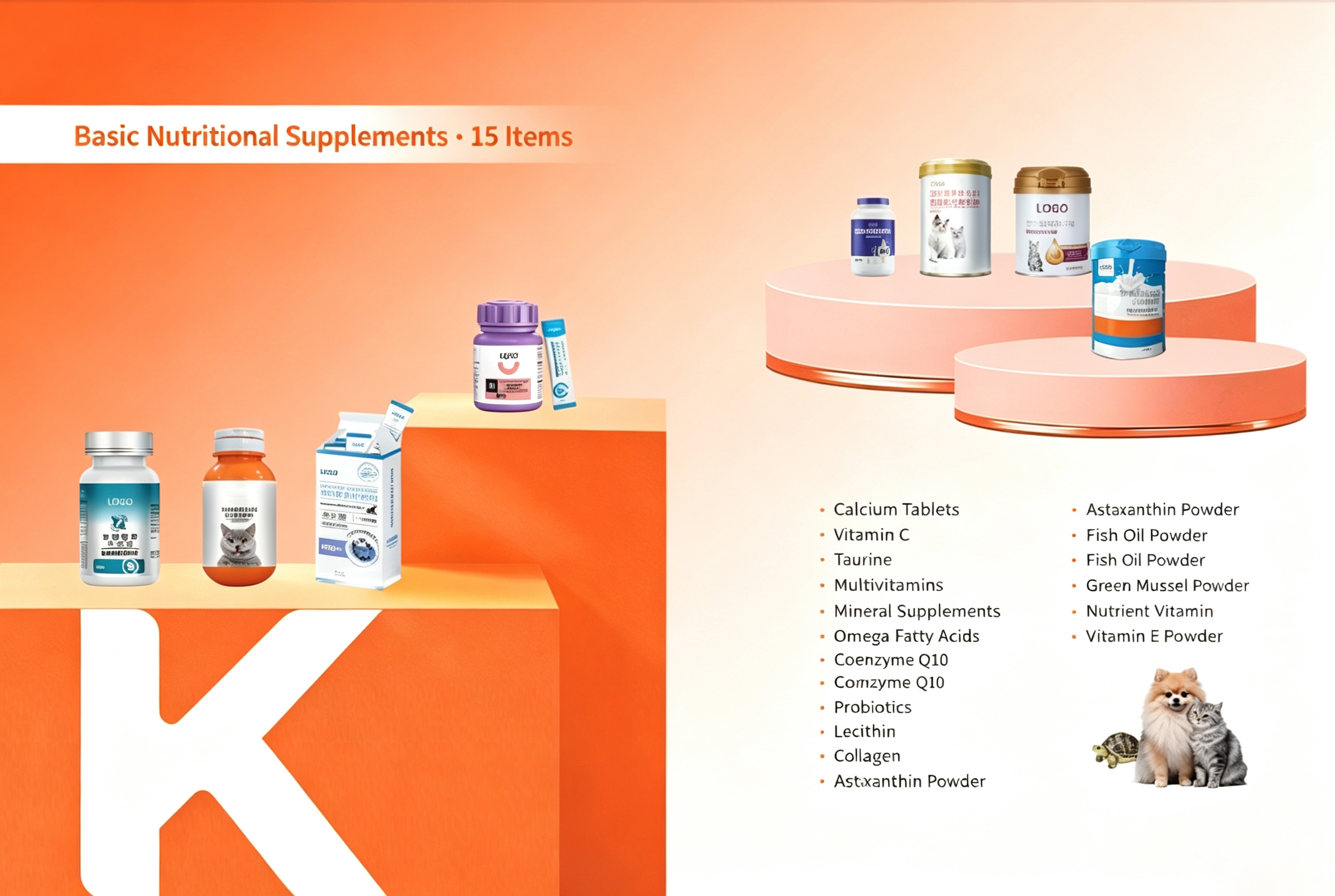
Different formulations have significant differences in process complexity and cost. For example, the cost of a regular tablet is the lowest, while soft capsules require a dedicated filling line and a more complex coating process. The types of dosage forms that a factory can produce also vary. Before making an inquiry, make sure that the other party's production line can meet your requirements.
For example, how many grams per tablet, how many grams per package, and how many pills per bottle. Specifications directly affect the amount of raw materials used and packaging costs.
If you have a clear idea (for example, each tablet contains 200 billion CFU Probiotics), tell the other party directly. The cost estimation will be more accurate. If you are still unsure, you can ask the factory for recommendations - they will be more familiar with the addition amounts that are balanced between cost and effect.
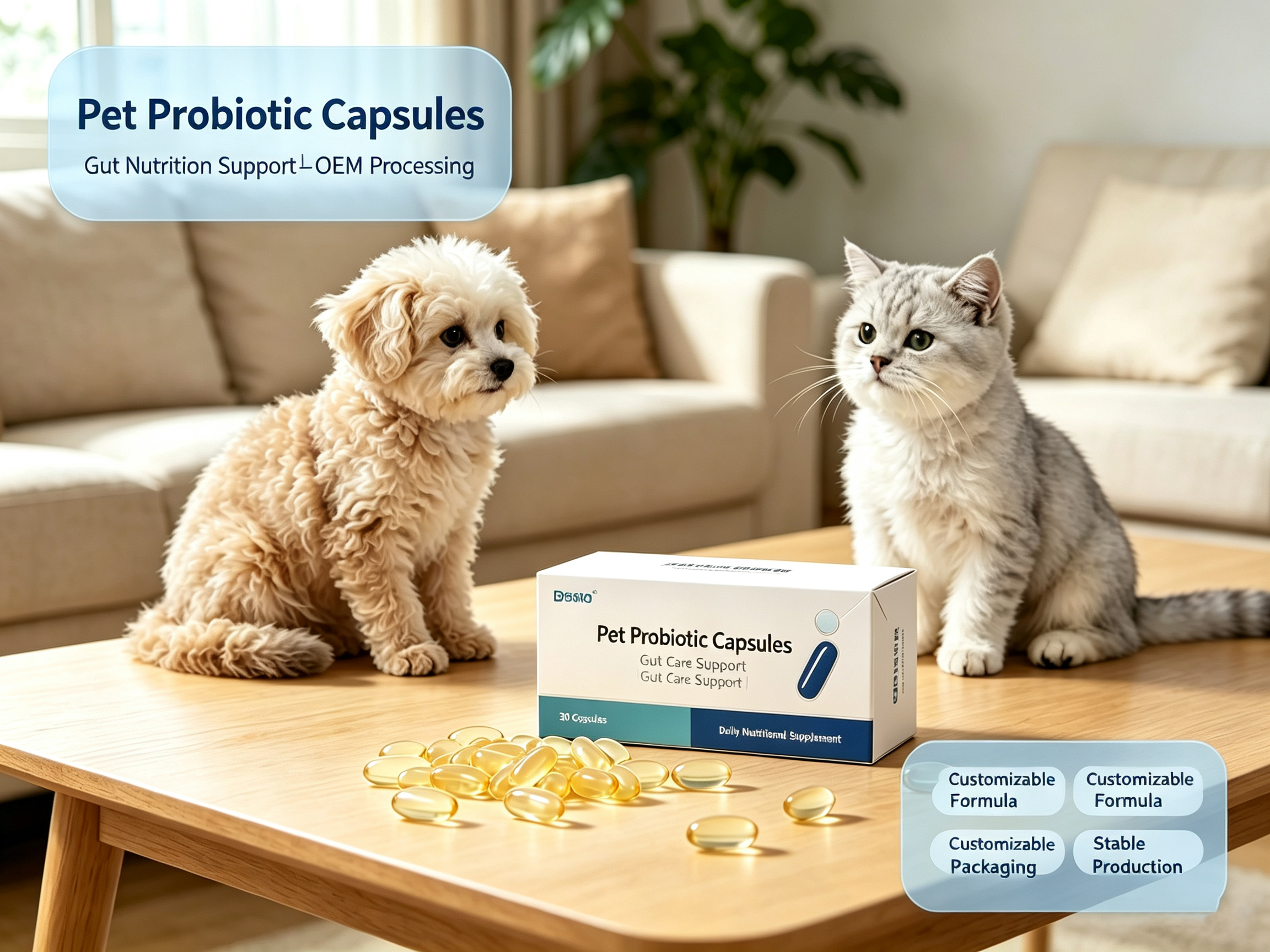
The factory's quotation is strongly related to the minimum order quantity. The larger the quantity, the lower the unit cost, as the costs of raw material procurement and production line commissioning can be spread out. If the quantity is too small, many factories may not accept it, or the unit price will be much higher. Clearly ask about the minimum order quantity threshold of the factory in advance.
If you plan to test the product before scaling up, it is best to mention this during the inquiry. This way, the factory can plan production and material preparation in advance.
Different packaging forms correspond to different filling lines and packaging material costs. Bottles and bags are the most common, while strip packaging is suitable for single feeding scenarios but requires higher equipment requirements.
Some factories offer a one-stop service from packaging material procurement to packaging, while others only handle production. Confirming this division of labor can avoid future disputes

For example, tests for heavy metals, microorganisms, and the content of active ingredients. Some channels require third-party CMA/SGS reports. If you have special requirements for test standards, inform the factory in advance so that they can assess the cost and cycle of testing.
Kalo Biotech, relying on the group's over 20 years of R&D and production experience in the human health industry, has shifted to pet nutrition products. Its production lines cover powder, tablets, granules, ointments, soft capsules, hard capsules, and other dosage forms, and can provide one-stop services from R&D to logistics. If you have high quality requirements and hope to find a partner with a medical background, you can consider it.

WhatsApp: +8613455471839
Email: sales@koalapetbio.com


This website uses cookies to ensure you get the best experience on our website.



 Phone
Phone
Comment
(0)