

In the pet food and nutrition sector, "intestinal health" has long transcended from a concept to a necessity. However, as a brand, if you are still stuck in the simplistic mindset that "Probiotics are good", then your product will inevitably fail. More commonly and fatally, people confuse Prebiotics, probiotics, and Postbiotics, blending them all together in the Formulation, labels, and marketing.
This article does not discuss the superficial aspects. From a perspective of Product Development and brand implementation, we will thoroughly dissect the underlying logic of these three components.
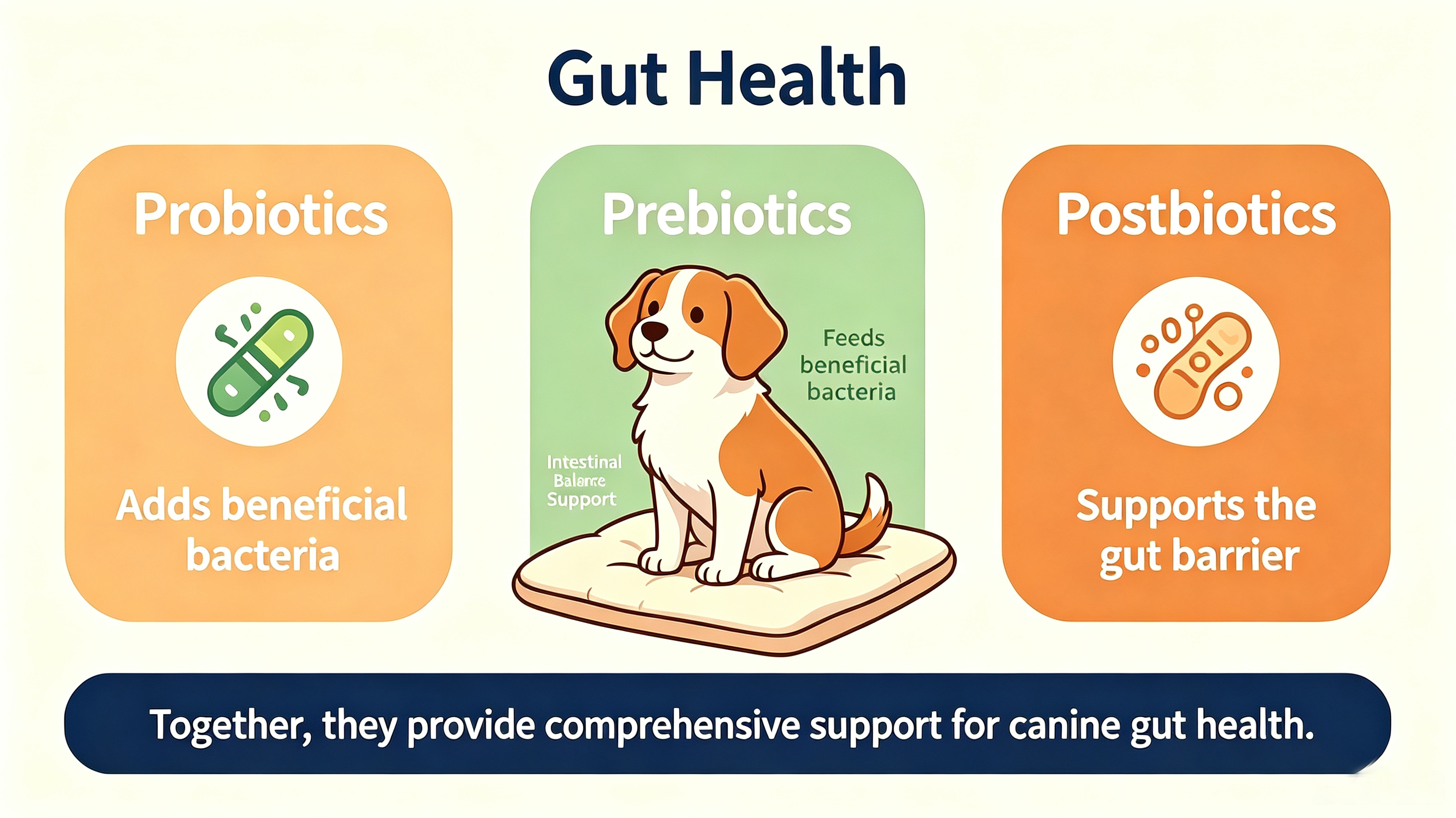
This is the source of all confusion.
Probiotics: They are "living microorganisms". They enter the intestines, colonize, multiply, and exert regulatory effects. The core is "living".
Prebiotics: They are "food". Usually, they are indigestible oligosaccharides or fibers, specifically feeding the beneficial bacteria in the intestines. The core is "nourishment".
Postbiotics: They are "metabolic products". The functional substances left after the activity of probiotics, including short-chain fatty acids, bacteriocins, peptides, etc. The core is "results".
Key point: Probiotics are "soldiers", prebiotics are "food", and postbiotics are "battle trophies". In terms of supply chain, stability, label regulations, and consumer communication, they are completely different logics.
If you are making wet food, fresh food, freeze-dried spray-dried products, please address the issue of probiotic activity on the table first.
Probiotics: They are afraid of water, oxygen, and high temperatures. During the processing steps of granulation, expansion, and high-temperature sterilization, most of them can be killed. Even with embedding technology, the decay of live bacteria during the Shelf Life must be verified by accelerated experiments. The only hard indicator is the terminal live bacteria count, not the initial value at the time of addition.
Prebiotics: They are stable to heat, acid, and processing. They are almost unaffected by conventional pet food processing techniques. This is its greatest engineering advantage.
Postbiotics: They are even more "resilient". The metabolites after the activity of probiotics, which are inactivated, are not sensitive to temperature, pH value, and extrusion. They are very suitable for spray-dried and canned scenarios.
Development suggestions:
Dry food/highly processed products → Prioritize the combination of prebiotics + postbiotics, and avoid trying to add live bacteria directly.
Freeze-dried/low-temperature cold pressing/independent powder Packaging → This is the only suitable layout for high-activity probiotics.
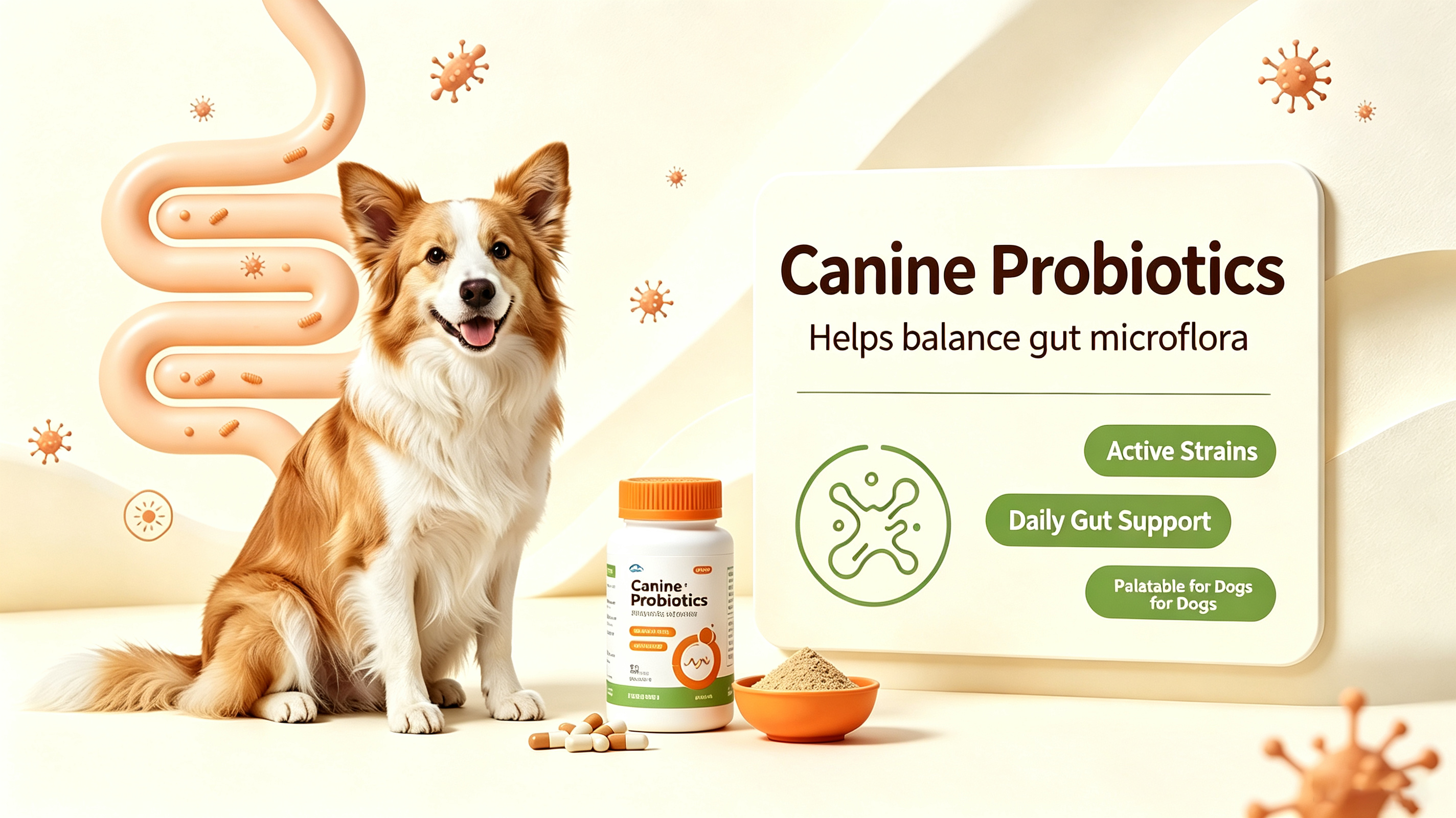
This is the most prone to making mistakes and is also the area that regulatory authorities pay the most attention to.
Probiotic labels: Must indicate the strain number (such as Enterococcus faecium DSM 10663), rather than just writing "probiotics" or "comprehensive bacteria". Common strains for Dogs and Cats have a clear list of allowable additions, exceeding the range is illegal. The live bacteria count (CFU/kg) must be indicated, and the promised value must have data from shelf-life endpoint testing as support.
Prebiotic labels: There is no mandatory strain requirement, but it needs to clearly indicate the chemical identity. Common ones include fructooligosaccharides (FOS), galactooligosaccharides (GOS), chicory root powder, yeast cell wall (MOS). Writing it as "probiotic complex" is a minus point. Professional consumers will directly pass over it.
Postbiotic labels: Currently, there is no specific standard for this. The compliant practice is to indicate the source strain and specific functional components (such as "brewer's yeast culture" or "animal bifidobacterium fermentation product"). Avoid directly claiming "postbiotics" without any supporting data, which can easily be regarded as concept speculation.
Key point: Labels are not marketing copy, they are legal documents. The strain number, live bacteria count, source, processing method, each one must withstand inspection.
Those who have conducted user research are well aware that pet owners have a natural affinity for "live bacteria", but they often have misunderstandings about "dead bacterial metabolites" - "They're all dead, what's the point?" This is the reality.
The consumer cognitive advantages of probiotics: intuitive, high trust, but also strong resistance - if the dog doesn't respond after taking them, they will immediately question "the bacteria won't work".
The cognitive threshold for prebiotics: it is easily misunderstood as "cellulose", and it needs to be repeatedly explained that "it does not directly take effect, it is for cultivating bacteria". The communication cost is high, but once the cognition is established, the repeat purchase stickiness is good.
The current cognitive status of postbiotics: the worst. It is almost zero, and it may even be misunderstood as "waste".
Propaganda strategy suggestions:
Do not present all three to consumers in a straightforward manner. The brand side should clearly understand the differences internally and select a core anchor point for external communication based on product positioning.
Mainly focuses on quick effect (soft stool regulation)→ Use postbiotics for "immediate response" messaging;
Focusing on long-term conditioning → Use probiotics to tell the "foundation" story;
Emphasize high-tech feel → Use probiotics to tell "freshly delivered".

Many brand owners like to use "all three together", thinking they are comprehensive. The result is: costs increase, effects do not show, and the labels are not clearly written.
The correct combination logic is based on the process path and the solution scenario:
High-processed grains (expansion/heat-baked)
Recommend: Prebiotics + Postbiotics
Do not add live bacteria. Use prebiotics to maintain the original bacterial ecosystem in the intestine and use postbiotics to supplement functional metabolites. Stable, reliable, and detectable.
Low-temperature processed grains / semi-wet grains
Recommend: Probiotics + Prebiotics (i.e., Synbiotics)
Note: The addition amount of prebiotics should be controlled. Excessive addition will lead to fermentation and gas production, causing flatulence or soft stools. It is recommended to start with a gradient test from 0.3% to 0.8%.
Functional snacks / powder / soft chew pellets
All three can be used, but it is necessary to clarify the priority. If the main promotion is "ready-to-eat immediate effect", place postbiotics in the C position; if the main promotion is "long-term conditioning", differentiate the Probiotic Strains.
Not recommended model: Averagely exerting effort on all three in the same product, without any data to prove the optimal ratio, is equivalent to having consumers pay for your experimental costs.
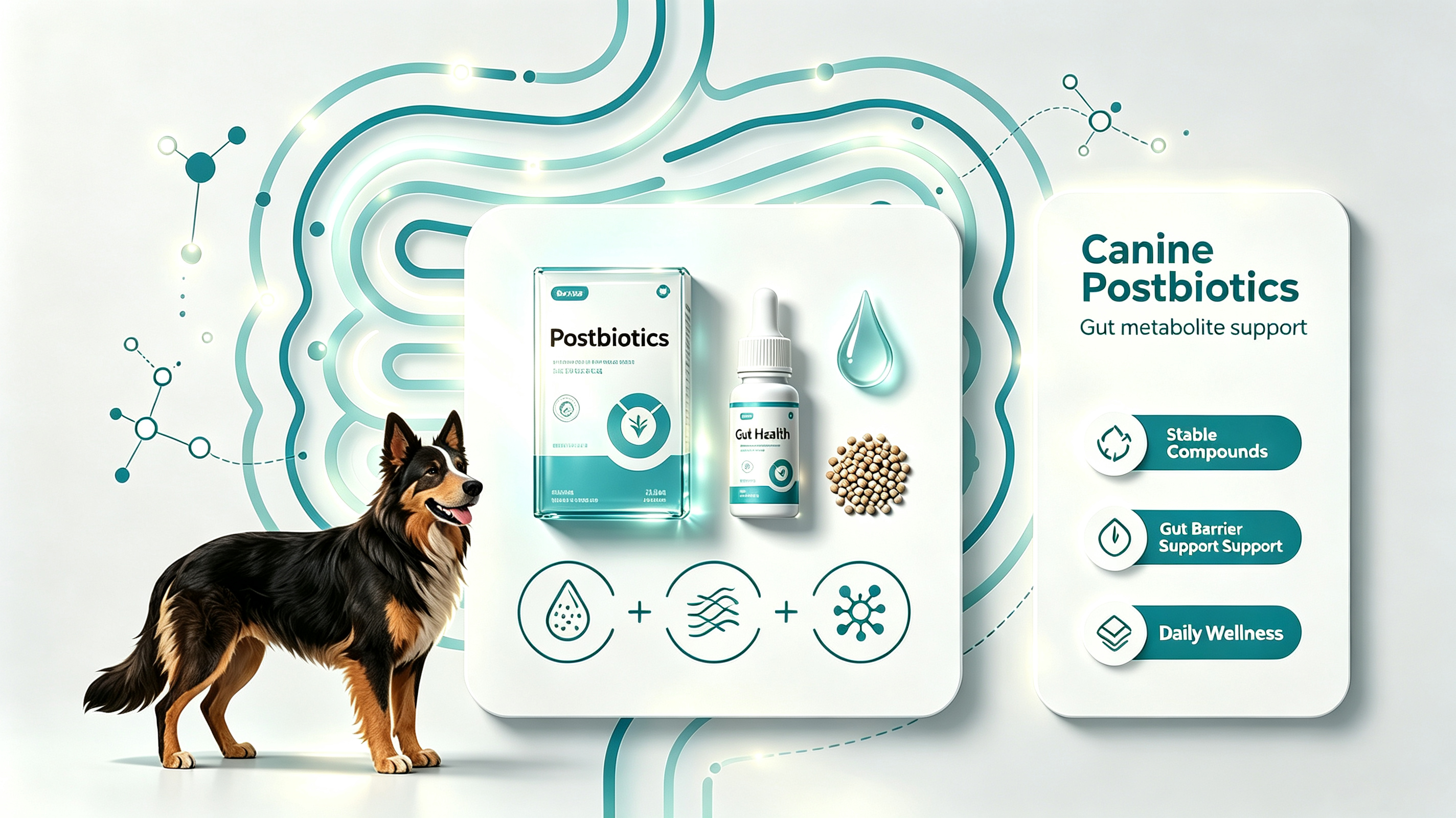
As a brand developer, the truly professional performance is not to cram all the concepts you understand into the product, but to clearly do the subtraction and not confuse, overstep,or exaggerate in the labels and communication.
Probiotics compete on bacterial strain selection and preservation technology;
Prebiotics compete on purity and fermentation utilization rate;
Postbiotics compete on standardized metabolite fingerprint patterns.
These three things have different tracks, costs, and verification methods. Mix them together and tell consumers "they are all good", it may seem lively in the short term, but in the long term, it will definitely undermine trust.
Remember: Clarity is itself competitiveness. Your product development guide should start by differentiating these three terms.
WhatsApp: +8613455471839
Email: sales@koalapetbio.com


This website uses cookies to ensure you get the best experience on our website.



 Phone
Phone
Comment
(0)