

When choosing the form for pet Probiotics, many brands tend to fall into a common mistake: Whatever sells well do it". However, in reality, the form is not just about the "different outer shell"; it directly determines the feeding conversion rate, Shelf Life stability, production cost, and even the fate of the brand in the distribution channel.
Today, we won't talk about the superficial aspects. Let's start from the four hard criteria of feeding method, active protection, Packaging cost, and target channels to help your brand find the "right" form.
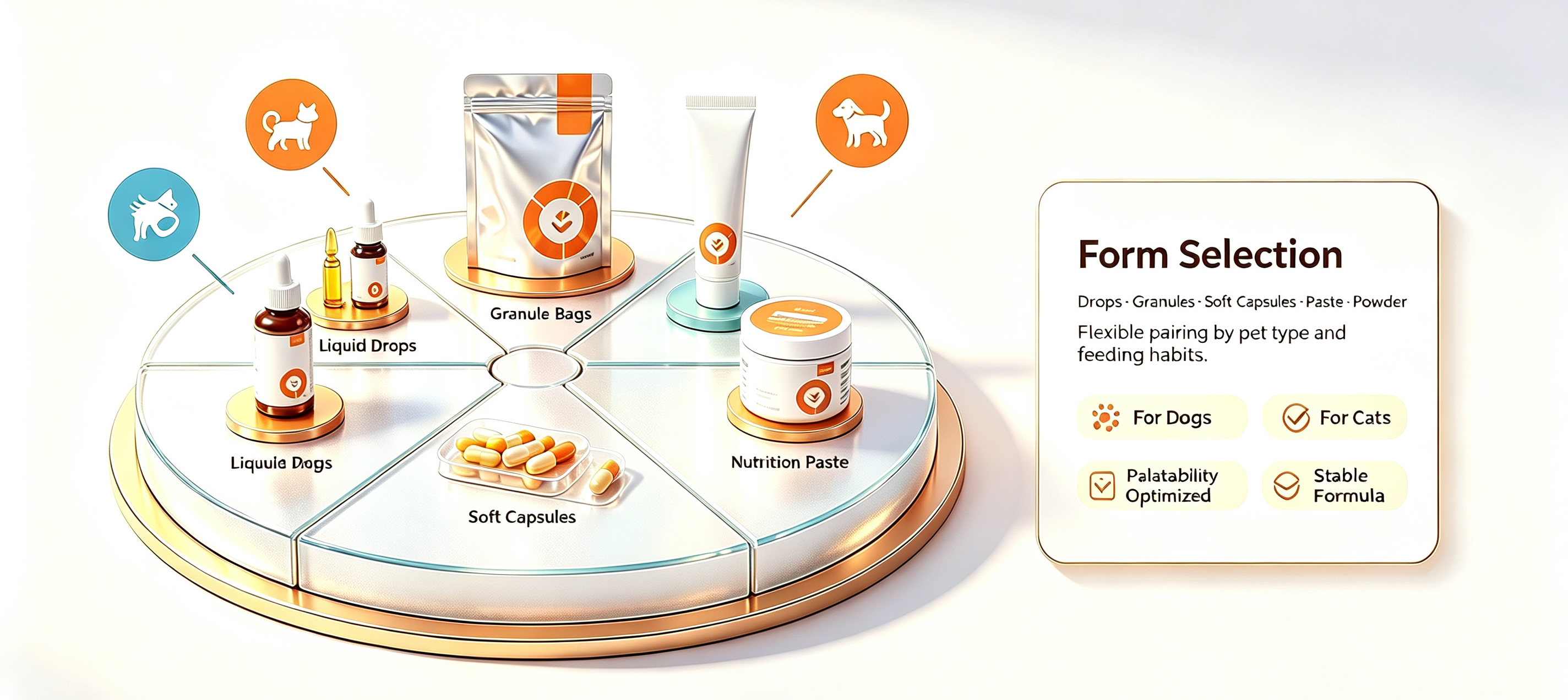
Powder Form: The biggest advantage is high mixing strength, which allows it to be easily mixed into dog food, canned food, or yogurt. For dogs that are not picky eaters, this is a stress-free choice. However, the drawbacks are also obvious - feeding operation requires two steps (pouring powder first, then stirring), and the dosage needs to be temporarily converted based on body weight, which is a test for the patience of pet owners. If the brand is positioned as "professional conditioning level", the "adjustable amount" of powder form is actually an advantage.
Tablet: The core advantage is "swallowing in one bite", with high feeding efficiency, especially suitable for large-sized and fast-eating dog breeds. However, the fatal weakness is extreme variation in palatability - once the dog smells the medicine, many intelligent small dogs will spit it out or use their tongues to block it. Unless it is made into chewable capsules and an attractant is added, otherwise, capsules are prone to discourage novice pet owners when it comes to "tricking the dog to take medicine".
Capsules: The feeding method is the most "moderate". It can be mixed with food or swallowed whole. However, in actual use, opening capsules is more troublesome than opening powder form packaging, and swallowing whole is risky for small dogs due to choking. The real value of capsules does not lie in the convenience of feeding, but in "precise measurement" - each capsule is a fixed number of live bacteria, and pet owners do not need to think.
>Key Conclusion: For "zero threshold" selection of powder form; for "mid-large dog owners" select capsules; capsules are only suitable for high-end user groups who have a strong insistence on "precise measurement".

Probiotics are living organisms, and the form determines how long they can survive.
Powder Form: It is the least stable. Naked Probiotic Powder directly comes into contact with air, light, and moisture. Once opened, the activity drops sharply. Even with freeze-drying technology, the number of live bacteria in powder form in the shelf life later stages is still difficult to guarantee. If the brand selects powder form, it must be accompanied by high barrier packaging (such as aluminum foil bags) and emphasize "open and eat immediately".
Tablets: The pressing process generates high temperatures and mechanical compression, which is a fatal blow to delicate probiotics. Even with the most advanced encapsulation technology, the loss rate of live bacteria in tablets is typically an order of magnitude higher than that in powder form. However, coated tablets can isolate moisture and oxygen, and perform well when not opened.
Capsules: These are the "the king of activity protection". Hard capsule shells can completely block air and moisture, and the internal probiotic powder is in a dormant environment, requiring no additional preservatives. More importantly, enteric-coated capsules can resist stomach acid, ensuring the live bacteria reach the intestinal colonization site directly. If your brand emphasizes the concept of "high live bacteria count", capsules are the only option that allows you to be confident in your test report.
> Key Conclusion: Ranking of active protection: Capsules > Coated tablets > Powder form > Tablets. If your strain is delicate (such as Bifidobacterium), prioritize capsules.
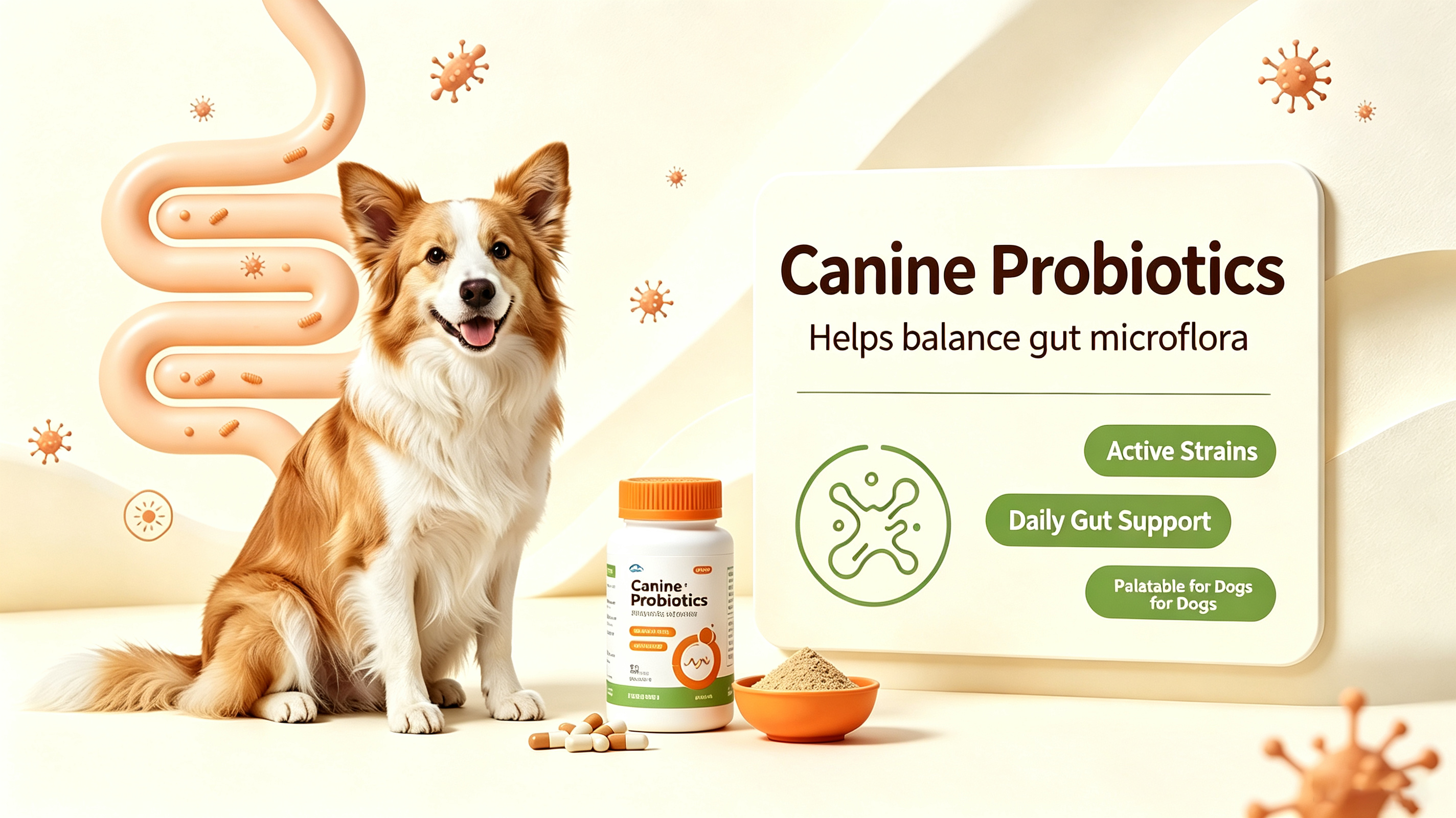
Powder form: The packaging form is the most flexible, ranging from single aluminum foil bags (1-2g) to canned (100g or more). The lowest single-use cost is achieved, but the investment in packaging equipment is high(requiring powder filling machines). The more hidden cost is weight - powder has a low density, and under the same amount of live bacteria, the volume of powder is 3-5 times that of capsules, resulting in significant increases in logistics costs and storage space.
Tablets: The lowest packaging costis achieved, using standard blister plates or plastic bottles, with strong equipment versatility. The lightest per unit weight, and logistics costs are friendly. However, note that the initial investment in tablet press molds and coating equipment is high, and the tablet formula requires more additives (fillers, binders), which indirectly increases raw material costs.
Capsules: The highest cost per capsule. The capsule shell itself (gelatin or plant gum) is a fixed expense, and the filling speed is slower than tablet pressing. However, capsules do not require additional preservative packaging, and can use ordinary HDPE bottles, which offsets some costs. The most crucial point is that capsules make the promise of "50 billion CFU per capsule" verifiable- this provides a reasonable basis for brand premium.
> Key Conclusion: For "ultimate cost-effectiveness", choose powder form; for "channel distribution efficiency", choose tablets; for "high average order value", choose capsules - because consumers are willing to pay more for "visible precision".

Offline pet stores (professional channels): Store owners prefer powder form because they can mix the food on-site and try it out, and large cans appear "affordable". However, powder is prone to moisture and caking at the terminal, requiring specific storage conditions for the store.
E-commerce (Tmall/ Douyin): Tablets and capsules are more suitable for live-streaming - pouring a few pills to show "how many billions per pill" has strong visual impact. Powder is more prone to powder leakage during courier transportation, resulting in higher negative reviews.
Pet hospitals (prescription/therapy line): Capsules are the first choice. Doctors need to precisely control the intake of bacteria per kilogram of body weight, and the "fixed dosage" and "enteric-coated characteristics" of capsules best meet the professional requirements of medical scenarios.
> Key Conclusion: Offline retail sales choose powder form; online bestsellers choose tablets (combined with attractants); hospitals or serious nutrition Product Lines must choose capsules; otherwise, professionalism cannot be sustained.

1. If the brand is in the start-up stage and has limited funds: Start with powder form (strip packaging), using low-cost methods to test market response. But be sure to use high-barrier aluminum foil bags + nitrogen-filled packaging to compensate for the active protection deficiency.
2. If the brand already has a stable customer base and wants to increase repeat purchases:Upgrade to capsules decisively. Although the cost per single unit is high, the reputation of "still having live bacteria after opening" will bring an astonishing number of referrals from existing customers. Remember: What pet owners hate most is not the price, but "no effect after consumption".
3. If the brand focuses on offline fast sales or large packaging: tablets are a reasonable choice, but please make them into chewable tablets or soft chewable tablets, and add natural chicken powder or liver powder. Otherwise, the palatability will ruin everything. At the same time, please place the label indicating the live bacteria on the back of the packaging - because informed consumers will have an idea when they see "tablets", and you don't need to make excessive promises.
There is no best Formulation; only the one that best suits the brand strategy. Powder formulations compete on "convenience and cost", tablets on "channel efficiency", and capsules on "effectiveness and trust". Figure out on which track your brand competes, and the answer will naturally emerge.
WhatsApp: +8613455471839
Email: sales@koalapetbio.com


This website uses cookies to ensure you get the best experience on our website.



 Phone
Phone
Comment
(0)