

The role of MSM in canine Joint Supplements is somewhat awkward. It is "dimethyl sulfoxide", a sulfur-containing compound, which is usually listed after Glucosamine and Chondroitin in the formula, like a mere third ingredient that serves no real purpose. But things are not that simple - the positioning of this ingredient in the US regulatory system directly determines how it should be handled in the formula and on the label.
From the available commercial products, the dosage of MSM varies significantly. A Taiwanese joint oral liquid contains 100 mg of MSM per 1.5 mL, while the formula in the Korean patent uses even higher amounts of MSM, surpassing chondroitin. In the domestic patent implementation examples, the addition of dimethyl sulfoxide ranges from 15 to 40 g per 1000 g of the formula.
However, no matter how much is added, MSM is not recognized as a "necessary nutrient" in the United States". The NASC (National Animal Supplement Council) once applied to the FDA to approve glucosamine and MSM as feed ingredients, but the FDA rejected it, citing "unproven nutritional purposes". This means that in the labeling system of most states in the United States, it must be indicated as "guaranteed analysis" and must have an asterisk, followed by a statement: "Not recognized as a food nutrient by AAFCO".
This positioning is subtle. It is not a nutrient, but you must ensure its content; you can sell it, but you cannot claim any "nutritional effect".
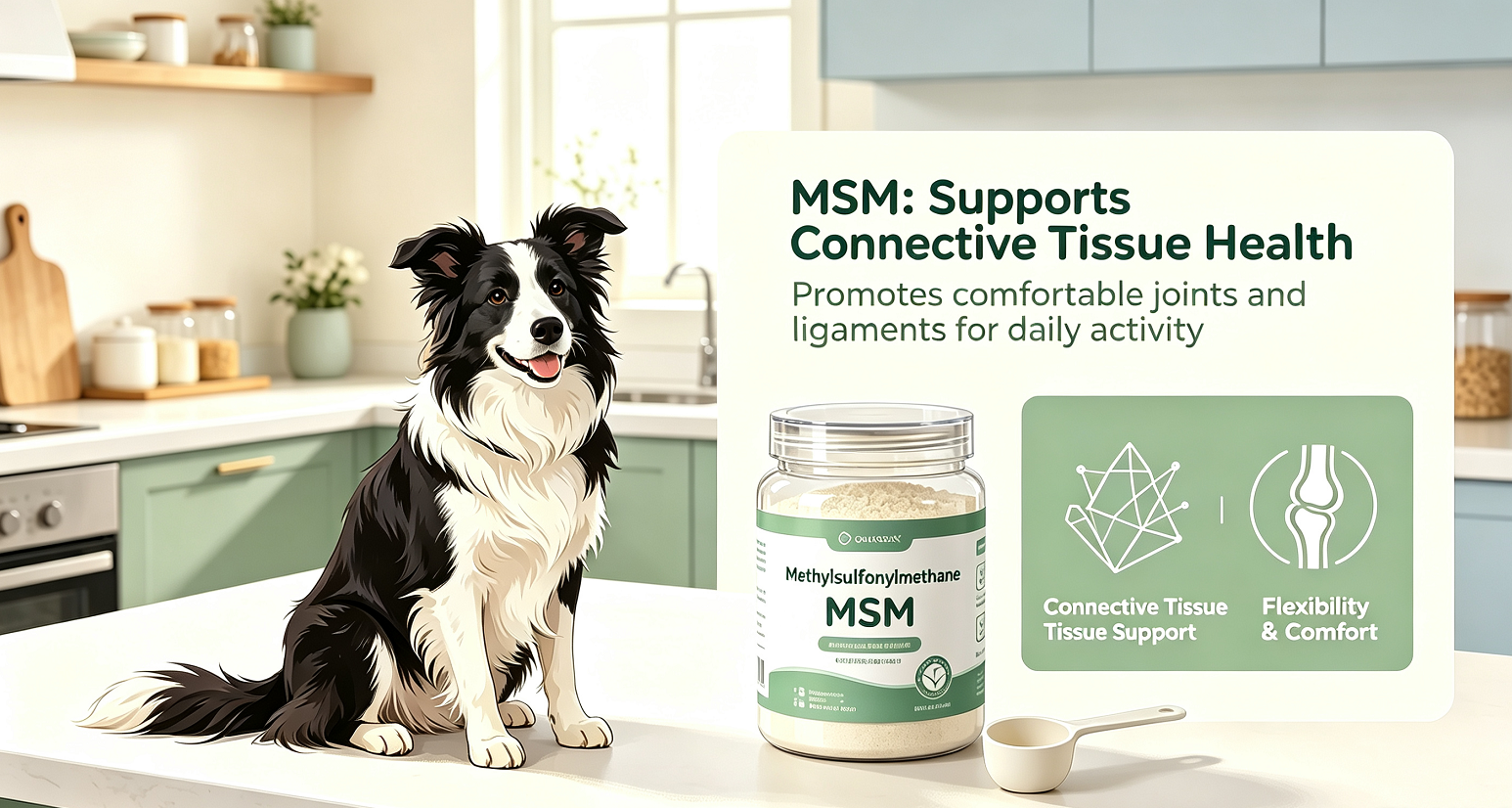
MSM itself has a bitter taste, which is almost a consensus among formulae. But interestingly, there is a patent that clearly states that MSM can enhance the Palatability of pet joint nutrition products. The logic is probably: The bitterness of MSM can suppress the worse flavors in the formula - such as the fishy bitterness of certain plant extracts or hydrolysates. It is not an attractant, but it might be a "masking agent". Of course, this effect varies depending on the formula, and adding too much is another matter.
The rules in Ohio, USA, are very detailed: MSM must be presented as the "minimum amount" in the guaranteed analysis, with an asterisk, followed by the statement "Not recognized as a food nutrient by AAFCO", with the font size and style matching the guaranteed value. The FDA has also sent a warning letter to a company because its product labels and website used expressions such as "treating arthritis" and "alleviating pain", which were deemed as unapproved new veterinary drugs. MSM can be present on the label, but it cannot be used for functional claims.
The requirements in China are different. The "Regulations on Pet Food Labeling" clearly states: If it is claimed that a certain feed ingredient has been used, the name and the amount of the ingredient must be clearly indicated in the composition of the ingredient. If MSM is listed as a "feed ingredient" in the formula and is claimed, the exact amount should be specified. Function claims are strictly limited, and the expression "preventing or treating pet diseases" is prohibited.

MSM is not a component that can be added or written as one pleases. There is an elasticity in its dosage, but the freedom on the label is very limited. In the United States, it depends on the state feed laws (the rules in Ohio are a typical example), and in China, it depends on the labeling regulations of the Ministry of Agriculture and Rural Affairs. The formula can be adjusted, but the way the label is written must follow the rules of the target market.
WhatsApp: +8613455471839
Email: sales@koalapetbio.com


This website uses cookies to ensure you get the best experience on our website.



 Phone
Phone
Comment
(0)