

Producing pet joint health supplements, collagen peptide has gained popularity in recent years. But how to combine it with traditional joint ingredients, what dosage form to choose, and who to target, there are many nuances.
Glucosamine and Chondroitin have been firmly established in the pet joint market for many years and have high recognition. However, their main roles are "preservation" and "protection" - maintaining the cartilage matrix and lubricating the joints. Collagen peptide's entry point is different. The hydrolyzed collagen peptide has a small molecular weight and high absorption efficiency, which can provide raw materials for the synthesis of the cartilage matrix. Studies have shown that the combination of collagen peptide with glucosamine, chondroitin, and vitamin C shows positive results in improving joint comfort, and the effect of this combination is superior to that of a single component in some indicators.
Key point: The value of collagen peptide lies in "supplying matrix raw materials", complementing the functions of glucosamine's "cartilage protection" and chondroitin's "lubrication and support", rather than replacing each other.
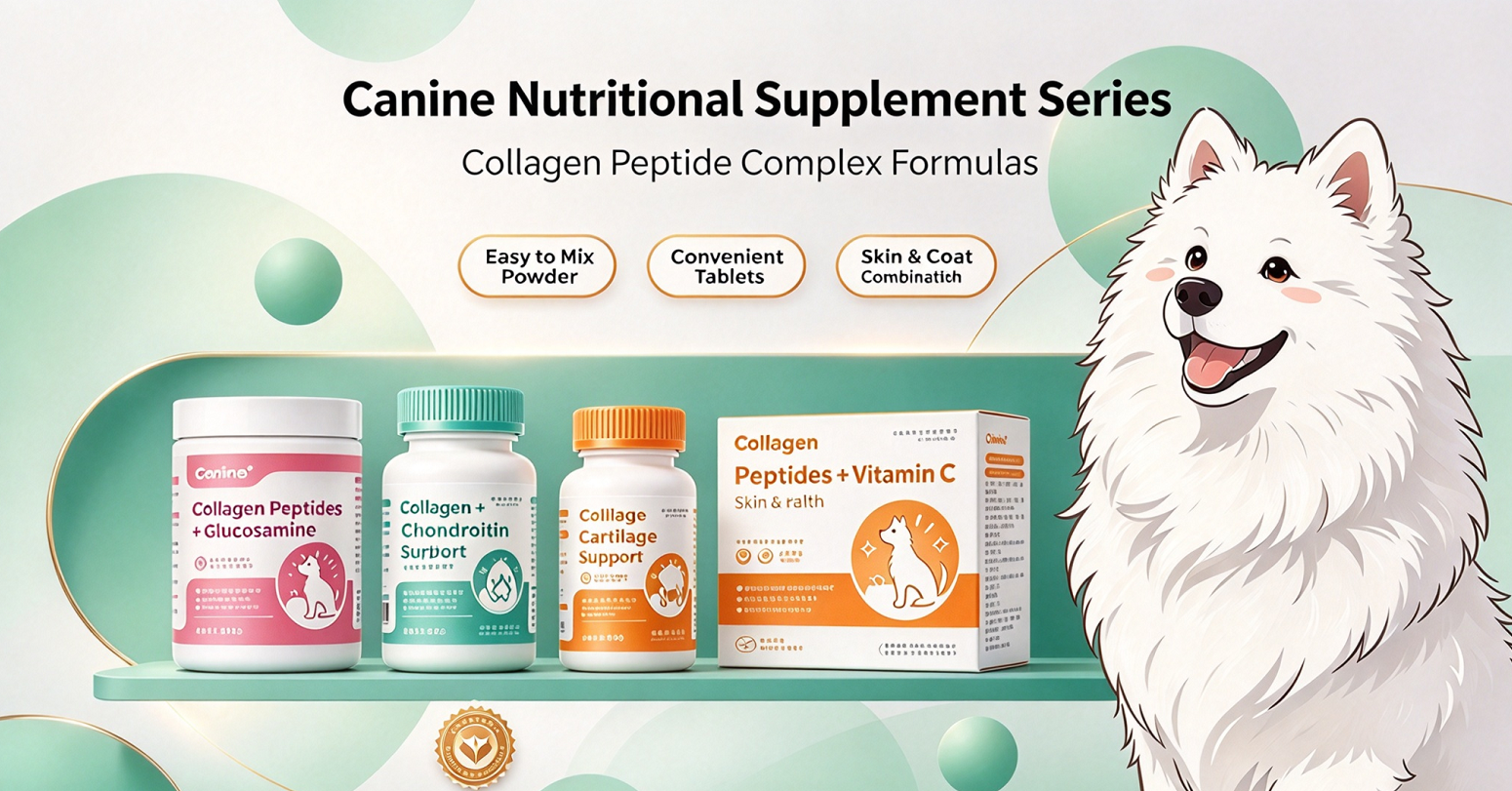
Vitamin C is often regarded as a "supporting role" in the formula, but its role is actually crucial. During the synthesis of collagen in the body, the hydroxylation process requires the participation of vitamin C. Without sufficient vitamin C, the Collagen Peptides ingested will have difficulty being efficiently converted into the structural proteins needed by the joint cartilage. It is recommended that the vitamin C content in each product be no less than 60mg, as this is a dose with practical physiological significance.
The addition amounts of glucosamine and chondroitin need to be balanced. The Palatability of pet food has natural limitations on the addition amount. The sulfate type raw materials of glucosamine have a distinct bitter taste, and adding too much will make pets refuse to eat. Refer to mature formulas on the market, and the addition of glucosamine should be controlled at 300-500mg per serving, while the addition of chondroitin should be 200-300mg per serving.
Key point: Rather than sacrificing palatability by increasing the content of glucosamine, it is better to ensure sufficient amounts of collagen peptides and vitamin C, so that both the "raw material end" and the "synthesis end" are guaranteed.

The formulation directly determines the rate of repeat purchases. Currently, pet joint products are mainly in the form of chewable tablets. The reason is simple: it's convenient to feed, and pet owners don't have to open their mouths to administer the medicine.
However, chewable tablets have two drawbacks. First, during the high-temperature tablet pressing process, the active ingredients are prone to loss. Data shows that under ordinary processing methods, the retention rate of active ingredients in glucosamine and chondroitin tablets may be as low as 58%, while the optimized dispersion tablet process can reach over 95%. Second, the hardness of the tablets is not well controlled, and small Dogs and Cats cannot bite them.
Key point: If making products for cats or small dogs, soft chewable and powder forms are better choices.Soft chewable has good palatability, and powder can be mixed with food, which has a high acceptance rate. Tablet forms are more suitable for medium and large-sized dogs, but the process needs to solve the problems of disintegration speed and active ingredient retention.
Senior Pets are indeed the core group for joint health care. Data shows that the expenditure on joint nutrition supplements for dogs and cats over 10 years old has significantly increased, and pet owners have the strongest consumption willingness at this stage. However, this market is already in a frenzy.
What deserves attention is another group: young dogs with breed genetic tendencies. Large dogs with hip joint dysplasia and some small dogs with patellar dislocation often start to show symptoms between 1-3 years old. The consumption characteristics of these pet owners are: willing to pay for "preventive health care" and have a higher attention to the scientific nature of ingredients. The "matrix raw material" positioning of collagen peptides precisely fits this preventive logic - not repairing when the joints are damaged, but continuously providing maintenance materials for the cartilage.
Key point: Product positioning can extend from "joint care for the elderly" to "daily joint maintenance for breed dogs", with a wider customer base and a smoother repeat purchase logic.
Collagen peptides are not a panacea in pet Joint Formulas, but when used in the right way - combined with vitamin C as the raw material supply, complemented by glucosamine and chondroitin for functionality, and selected with the right formulation and target population - this ingredient can create differentiated products.
WhatsApp: +8613455471839
Email: sales@koalapetbio.com


This website uses cookies to ensure you get the best experience on our website.



 Phone
Phone
Comment
(0)