

When choosing joint health supplements for dogs, Glucosamine and Chondroitin are almost always found together in the formula. However, from a Formulation design perspective, these two ingredients play different roles. The logic behind putting them together, as well as how to label and explain them to consumers, actually requires a well-organized approach.
From a biochemical perspective, glucosamine is the precursor substance of glycosaminoglycans, while glycosaminoglycans are the building blocks of proteoglycans, and proteoglycans are the basic matrix of joint cartilage. In simple terms, glucosamine is more like the "raw material" for cartilage metabolism - it does not directly turn into cartilage, but provides the substrates needed for cartilage cells to synthesize.
Chondroitin is the dominant component in joint cartilage. It is a polymer composed of repeating connections of galactosamine sulfate and glucuronic acid, and it is naturally present in tissues such as tendons, bones, and intervertebral discs. Its role in the formula is more like "protection" - inhibiting the activity of cartilage-degrading enzymes and helping to retain moisture in the cartilage.
A randomized double-blind trial on canine hip and elbow osteoarthritis showed that the combination of glucosamine and chondroitin showed statistically significant improvements in pain scores, weight-bearing ability, and overall disease severity after continuous administration for 70 days. Notably, this combination takes effect more slowly than carprofen (a non-steroidal anti-inflammatory drug), which shows significant effects on the 42nd day, while the glucosamine/chondroitin group does not until the 70th day.
This "slowness" actually indicates their positioning: not a painkiller, but a long-term structural support. Glucosamine provides supportive synthesis direction, and chondroitin focuses on protecting existing cartilage and reducing further degradation. They complement each other rather than repeat each other in mechanism.

On the labels of pet joint health supplements, it is common to see "each capsule contains XX mg of glucosamine and XX mg of chondroitin". But there is an easily overlooked detail: whether the label indicates the added amount or the actual content, and whether the unit is "per capsule" or "per gram", directly determines the value of this number.
Take a certain US-sold dog joint chew tablet as an example. The label indicates that each capsule contains 500 mg of glucosamine sulfate and 50 mg of chondroitin sulfate. This ratio (10:1) is quite typical in the market. The feed regulations in Ohio require that such components must be labeled as "minimum guaranteed quantity" and accompanied by an explanation that "not recognized as essential nutrients by AAFCO".
A more practical approach is to calculate: based on the dog's weight and the product's recommended feeding amount, calculate how much glucosamine and chondroitin are actually ingested each day. For a 60-pound dog that takes 4 capsules per day, the actual intake would be 2000 mg; if another product is labeled "per gram" and is fed 2 grams per day, it would be a different calculation.
Many brands in the market like to emphasize "high content" and "high concentration", but the core communication difficulty of glucosamine and chondroitin does not lie in "high", but in "slowness".
The "70-day" time point in the clinical trial is actually a valuable communication material for brand owners. It means: consumers need to be informed in advance that this product does not show changes within a week. If the brand owner avoids this point, consumers are likely to give up after the third week because of "no effect", and then leave a bad review for the product.
Another point worth discussing is source transparency. The common sources of chondroitin include pig, cow, and shark cartilage, while glucosamine is mostly derived from crustaceans. For dogs with food allergy concerns, clearly indicating the source is more practical than just listing the milligram figures.
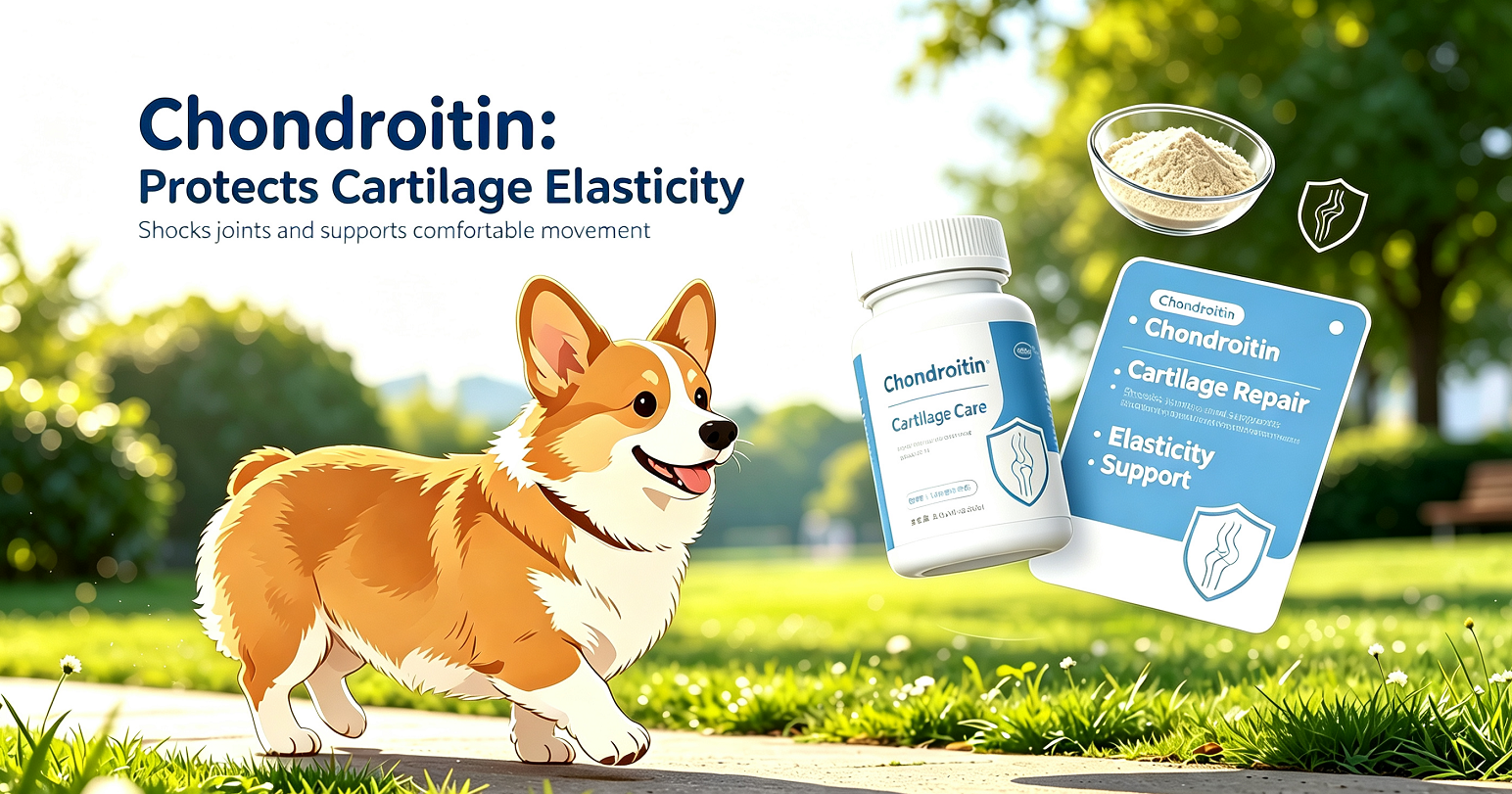
Glucosamine and chondroitin play different roles in the formula: one is more about "supplying nutrients", while the other is more about "protection". The value of their combination lies in the complementary mechanisms rather than a simple addition. At the labeling level, focusing on the actual intake amount is more practical than concentrating on the large numbers on the label. Brand communication should also convey "it takes time to take effect" as one of the core messages - this is not only honest but also helps consumers establish correct usage expectations.
WhatsApp: +8613455471839
Email: sales@koalapetbio.com


This website uses cookies to ensure you get the best experience on our website.



 Phone
Phone
Comment
(0)