

In the field of pet nutrition, "Synbiotics" is moving from concept to the shelves. It is not a simple "Probiotics + Prebiotics" mixture, but a set of precisely coordinated ecological logic. If the intestines of Dogs and Cats are compared to a "microbial garden", probiotics are the external "gardener", and prebiotics are the "customized fertilizer" specifically for nourishing these gardeners. When combined, the goal is clear: to ensure that beneficial bacteria survive, establish themselves, and grow vigorously.
The core value of Synbiotics in "Directional Enhancement". When probiotics are supplemented alone, exogenous strains face three major challenges: inactivation by gastric acid and bile, rejection by the resident bacterial community, and lack of a specific food source. Synbiotics, through scientific proportioning, simultaneously provides the preferred prebiotics for specific Probiotic Strains, achieving three goals:
1. Guidance: Some prebiotics (such as fructooligosaccharides) can competitively bind to pathogen receptors, reducing the resistance of probiotics to colonization;
2. Enabling: Prebiotics are fermented by beneficial bacteria, producing short-chain fatty acids (SCFA), directly lowering the pH of the intestinal tract and inhibiting harmful bacteria;
3. Longevity: Continuous supply of "bacterial food" can extend the metabolic activity period of exogenous probiotics in the intestinal tract.
> Key Logic: Not all prebiotics are suitable for all probiotics. For example, Lactobacillus prefers fructooligosaccharides (FOS) and low-galactooligosaccharides (GOS), while Bifidobacterium responds better to low xylooligosaccharides (XOS) and inulin. Choosing a "bacteria-prebiotic" combination verified through in vitro fermentation is the essence of synbiotics.
In dog and cat formulas, the following four types of prebiotics are most widely used, each with its advantages and disadvantages:
- Fructooligosaccharides (FOS) - Broad-spectrum basic type. Promotes Lactobacillus and Bifidobacterium, while inhibiting Clostridium. However, excessive intake (more than 5% of dry matter in the diet) can cause loose stools in dogs and cats, so the dosage must be controlled.
- Galactooligosaccharides (GOS) - Simulate breast milk effect. Friendly to the intestinal development of young animals, with good heat resistance, suitable for spraying on extruded diets.
- Xylooligosaccharides (XOS) - Highly efficient low-dose type. The effective concentration only requires 1/5-1/3 of FOS, and has strong resistance to gastric acid, suitable for precise addition to small-sized cats.
- Inulin (long chain) - Slow-release fermentation type. Ferments slowly in the colon posterior section, producing less gas, but some dog breeds are sensitive to inulin, and it should be introduced from a low concentration.
> Note: Maltodextrin (MOS) is often classified as a prebiotic, but its main function is to adsorb pathogenic bacteria (such as Salmonella), rather than selectively promoting beneficial bacteria. It is more suitable as an auxiliary functional factor in synbiotics, rather than as the main beneficial prebiotic.
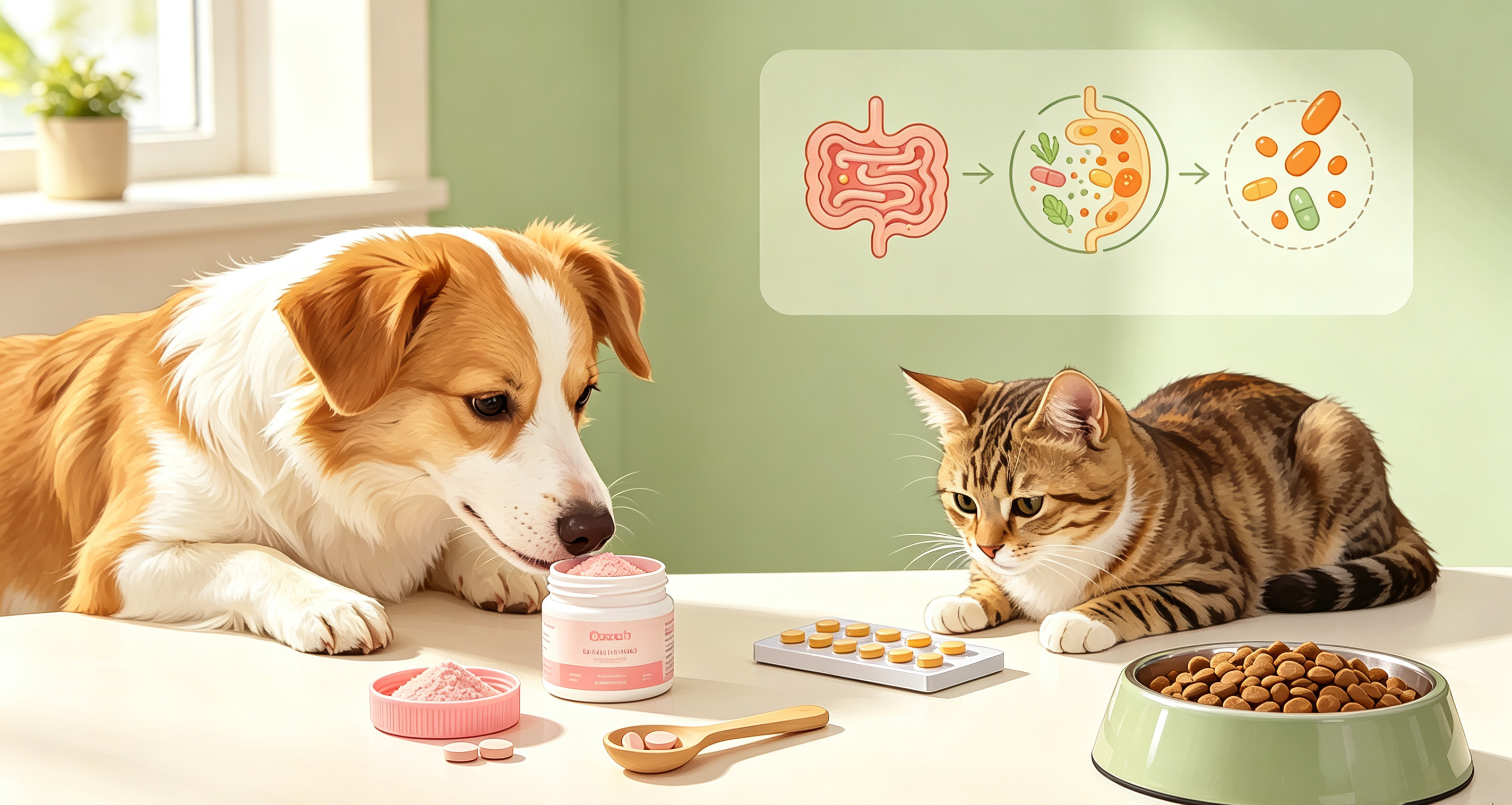
The intestinal structure, bacterial community spectrum, and physiological characteristics of dogs and cats are completely different. The design of synbiotics must adhere to the principle of "divide and conquer":
| Comparison Dimension | Dogs (omnivorous tendency) | Cats (specific carnivorous) |
| Intestinal Length | Relatively longer (about 4-6 times body length) | Shorter (about 3-4 times body length), more dependent on rapid passage through the stomach |
| Gastric Acid pH | Empty stomach pH is about 2-4 | Empty stomach pH can be as low as 1.5, with higher pathogen inactivation rate for live bacteria | |
| Dominant Bacterial Phyla | Firmicutes + Bacteroidetes balance | Firmicutes dominate absolutely, while Actinobacteria (Bifidobacteria) have naturally low abundance |
| Carbohydrate Tolerance | It has a certain adaptability to starch/fiber | The utilization rate of plant fiber is low, and excessive prebiotics are prone to cause colonic gas retention |
For Dogs: You can choose a compound containing FOS + GOS, combined with spore-forming bacteria (such as Clostridium butyricum) or lactic acid bacteria (e.g., Lactococcus lactis), to ensure full intestinal fermentation.
For Cats: It is recommended to prioritize the use of low-dose XOS or GOS (no more than 0.5g per cat per day), combined with lactic acid-producing bacteria with strong lactate production or specific anaerobic Bacterium strains, and strictly avoid high-dose inulin to prevent abdominal distension risks.
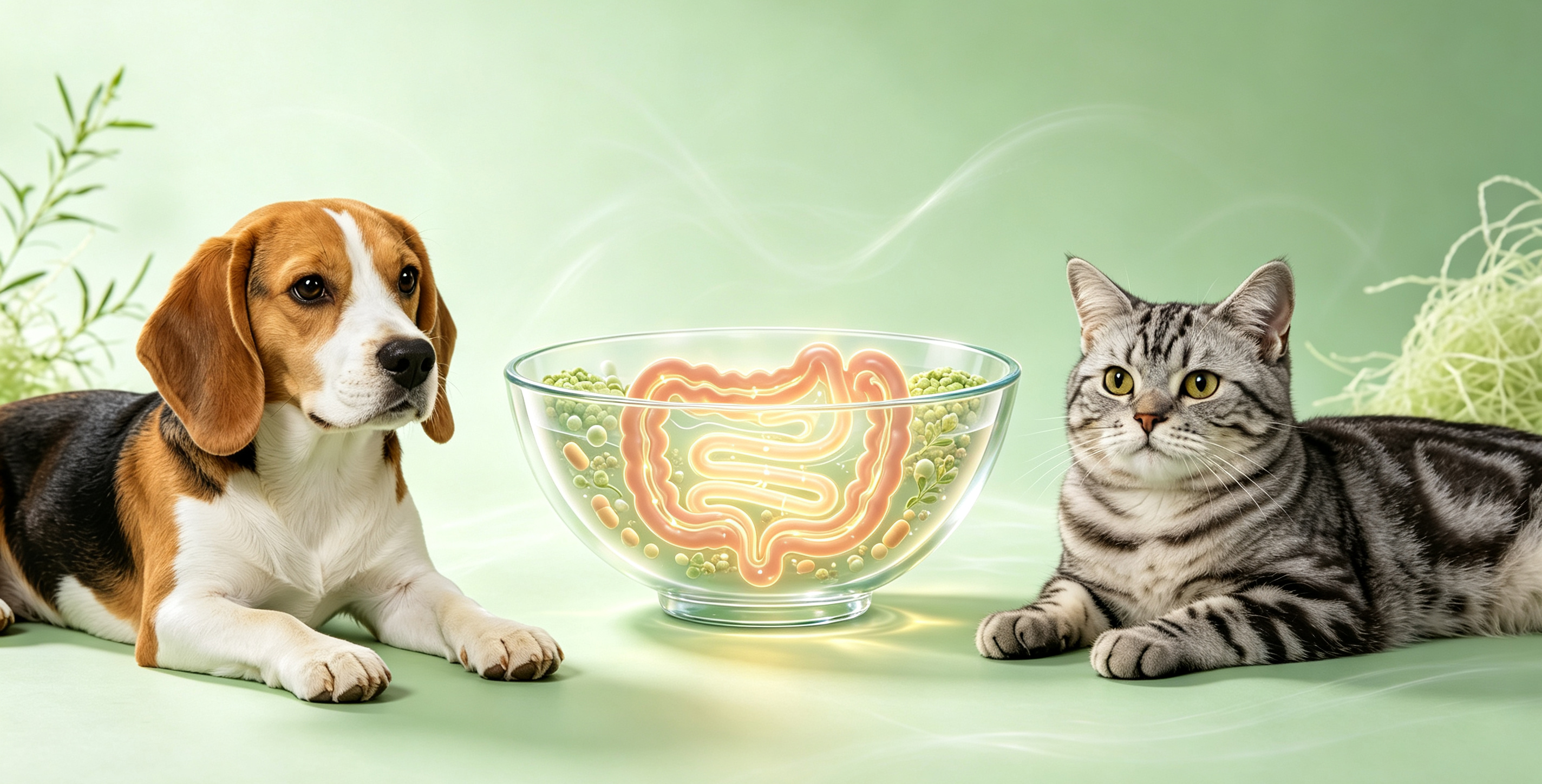
- Powder: Advantage of High Live Bacteria Preservation. Freeze-dried powder or microencapsulated powder has the best stability at a moisture activity (Aw < 0.2) and can flexibly adjust the single-dose administration (based on body weight). Suitable for multi-pet families or sensitive dosage periods (such as grain transition). Shortcomings: Requires mixing with food or water, slightly lower compliance, and needs to be refrigerated and sealed after opening.
- Tablets (chewable tablets/press tablets): Advantage of Convenience and Palatability. Through low moisture pressing,some strains can tolerate room temperature storage. However, the high temperature and high pressure during the pressing process will lose 20%-40% of the live bacteria count. It is recommended to select products marked with "embedded bacteria strains" or "enteric-coated" technology. Suitable for adult healthy pets during maintenance periods.
> Practical Suggestions: For treatment/therapy periods, prefer powder (ensuring sufficient live bacteria reach), for daily maintenance periods,use tablets (convenient feeding). If a combined formula is produced,you can use the powder as the "high live bacteria core package" and the tablet as the "portable maintenance package" to form a scenario-based product matrix.
Design Goal: Improve seasonal soft stools in adult dogs, while also providing immune support.
- Strain Layer: Clostridium butyricum BC-30 (resistant to heat and acid, produces L-lactic acid) + Lactobacillus Lp-115 (adheres to intestinal epithelium, competes for exclusion).
- Prebiotic Layer: Low FOS (120mg per dose) + XOS (30mg per dose) - The two sugars work together, combining fast and slow fermentation.
- Auxiliary Layer: Added yeast β-glucan (activates macrophages) + trace zinc amino acid chelate (reduces intestinal mucosa damage).
- Formulation Design: Use double-layer powder - the outer layer is a soluble auxiliary material (containing prebiotics), and the inner layer is microencapsulated live bacteria, mixed with warm water (< 40°C) for immediate consumption.
Improved Cat Version: Replace FOS with low galactooligosaccharide (GOS), and reduce the total prebiotic content by 30%, with a focus on animal Bifidobacterium lactis subsp. lactis (cat-derived isolate), combined with freeze-dried chicken liver powder to improve palatability.

The essence of the combined supplement is to use "the element" to nourish "bacteria", and then use "bacteria" to protect "the intestine". An excellent formula is not simply the simple addition of bacteria strains and prebiotics, but based on the physiological differences of dogs and cats, formulation technology, and the actual daily intake amount, a precise subtraction - eliminating redundant doses, eliminating ineffective combinations, and eliminating friction with pet owners' feeding habits. In the future, with the popularization of individualized intestinal sequencing technology for pets, the combined supplement will move towards "precise matching". But for the present, choosing products that have undergone challenging experiments for verification, and which clearly label the strain name and the source of the prebiotics, is the most reliable investment that pet owners can make for their pets' digestive systems.
WhatsApp: +8613455471839
Email: sales@koalapetbio.com


This website uses cookies to ensure you get the best experience on our website.



 Phone
Phone
Comment
(0)