

To create a brand-owned cat probiotic product, the selection of formula strains is undoubtedly the foundation, but what truly determines the repeat purchase rate are often the details before "feeding them in": whether the cat is willing to eat it, how the owner feeds it smoothly, and how long the live bacteria can survive after opening. The three main dosage forms - powder, capsules, and tablets - are based on different trade-offs in terms of Palatability, Stability, and feeding scenarios.
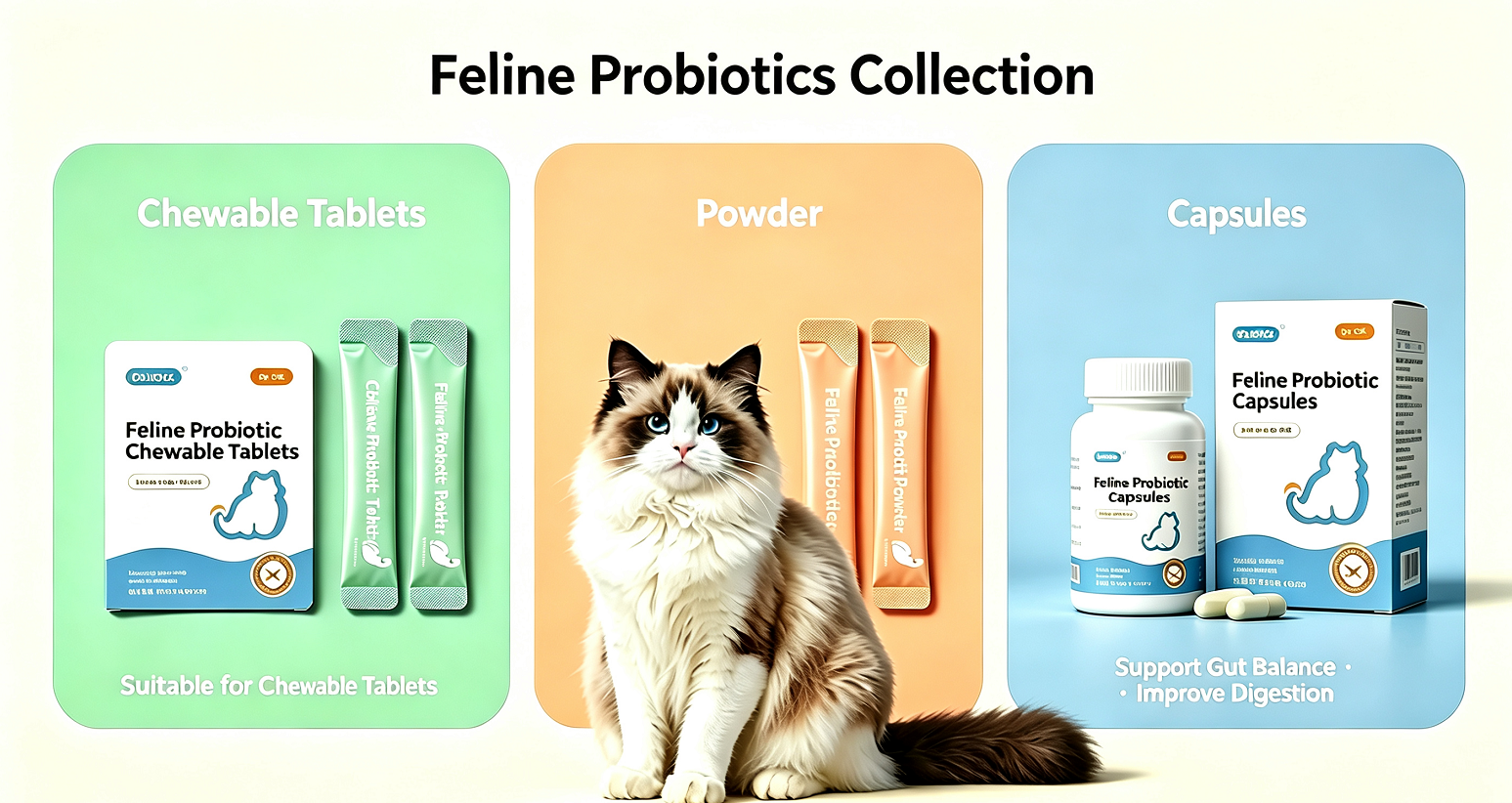
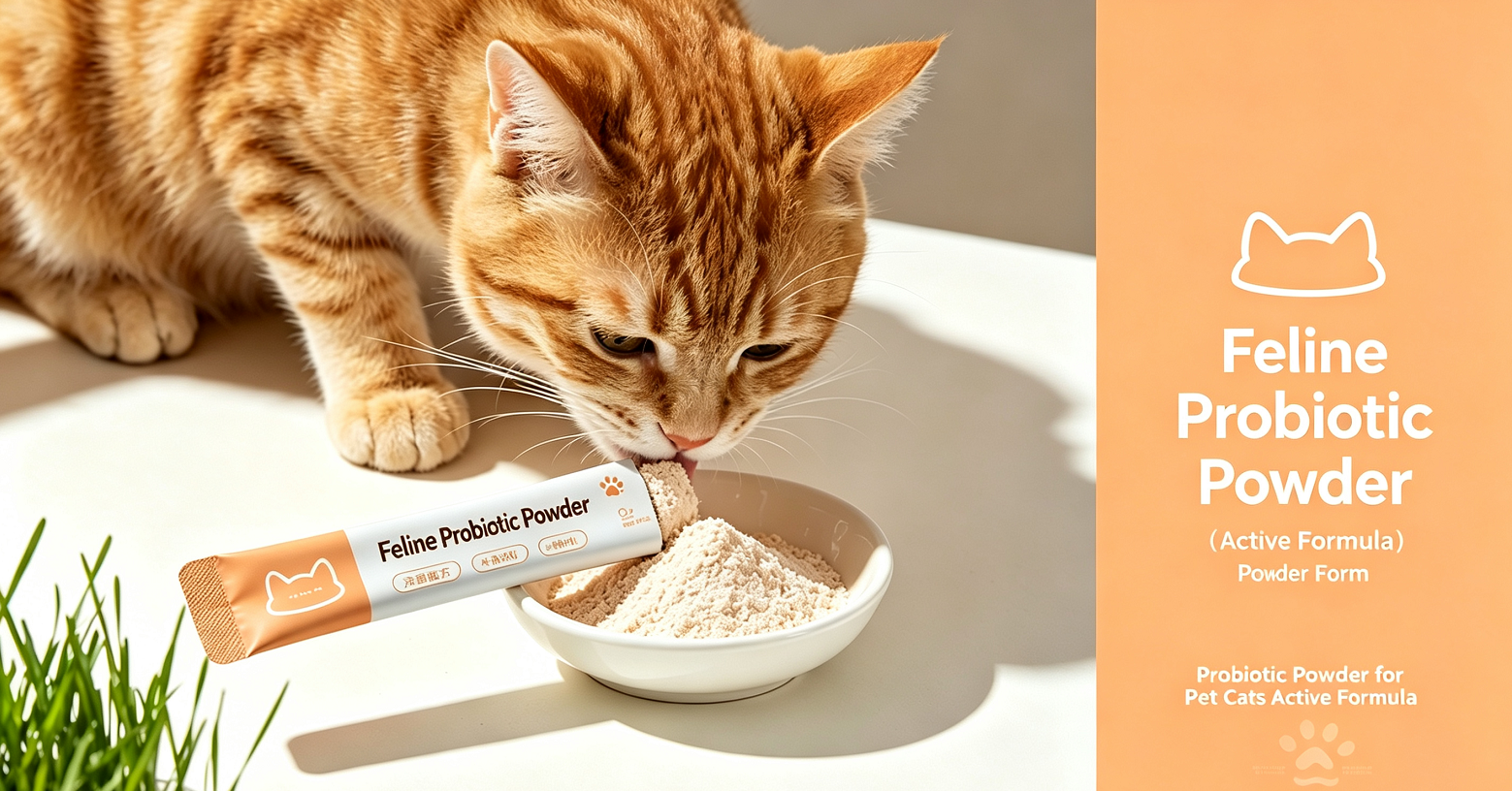
Powder is the preferred dosage form for cat owners who are picky about food. Cats have a high level of vigilance towards foreign objects, and if a pill is placed in their mouth, they may spit it out immediately and never touch that treat again. The advantage of powder is its "invisibility" - the fine powder is mixed into wet food or canned food, and the cat hardly notices, making the feeding process smooth without resistance and thus avoiding negative memories. From the perspective of palatability, powder is naturally more acceptable than solid Formulations. There are also studies in the market that confirm that cats have a good acceptance of powder supplements with specific flavor components added.
However, there is an unavoidable drawback for powder: the degradation of live bacteria after opening and the problem of moisture absorption. Probiotics are living organisms, and exposure to air, moisture, and high temperatures will accelerate their inactivation. Even with excellent laboratory data, the actual number of live bacteria in the cat's mouth after repeated opening of the large powder container may have been reduced. For brand-owned powder products, packaging strategies must prioritize "small-dose individual packaging". For example, aluminum foil individual bags or single-dose strips. When using, tear one bag, and the remaining will not be affected. This adds packaging costs for the brand, but it is crucial for product reputation - consumers will not test the live bacteria count; they will only look at whether the cat has an effect after eating.
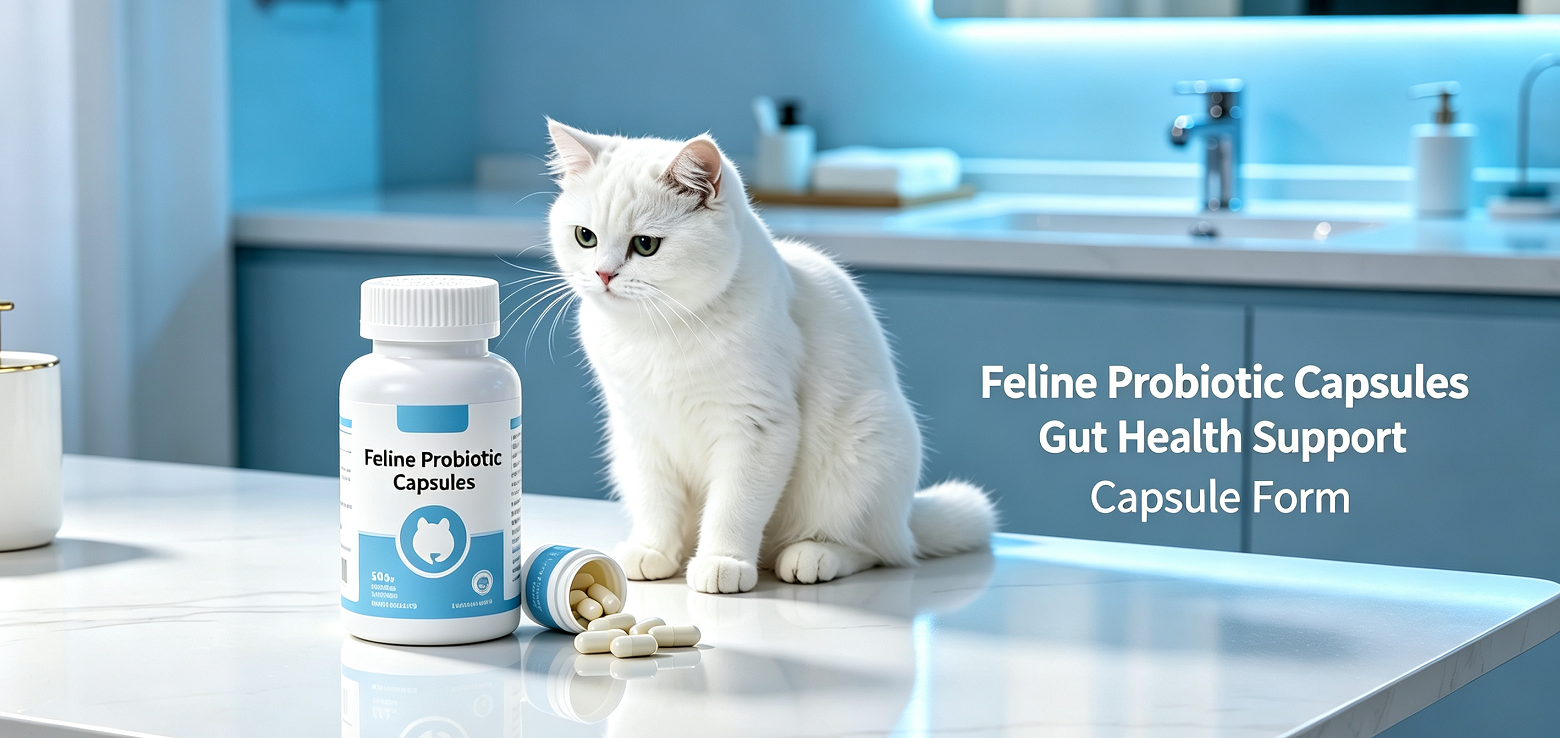
The core value of capsules lies in stability. The capsule shell isolates air and moisture, helping the strains survive the Shelf Life and also facilitating the owner's precise control of the dose per meal, without worrying about "over-dosing or under-dosing". For multi-cat households that need to supplement a specific cat, capsules are also easier to handle, as they do not mix with shared food and can be distinguished by the owner.
The problem lies in the feeding process. Cats do not actively swallow capsules; the owner either uses a feeding syringe to force-feed or breaks the capsule to pour out the powder and mix it into the food. The risk of force-feeding is that cats may experience stress or a vomiting reflex. More troublesome is that once the capsule content is exposed, it often has a smell that cats resist, and the powder that could pass undetected in the canned food becomes "suspicious" when poured out from the capsule. Therefore, the capsule form is more suitable for scenarios where the owner has already mastered the feeding skills or the cat is generally docile and cooperative. If the user profile of the brand includes a large proportion of "new cat owners" and "difficult-to-feed users", the negative reviews for capsules are likely to focus on "it simply won't go down" rather than "the live bacteria count is too low".
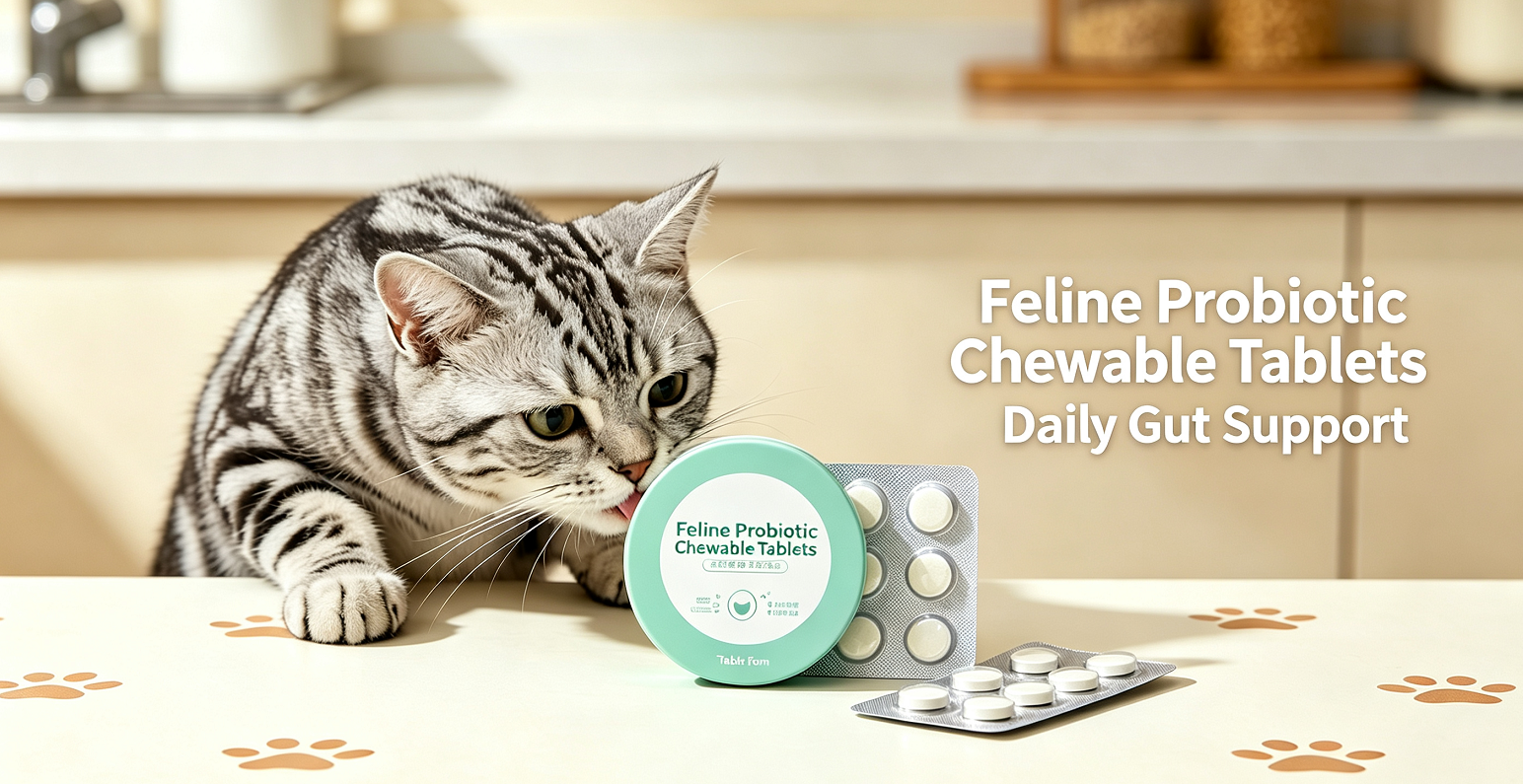
The biggest selling point of tablets is that "it's like feeding a snack". If it's a chewable tablet, coated with chicken liver powder or yeast extract, the cat may eat it voluntarily, and the owner will have the easiest experience. For daily health care scenarios, without strict dose control, the convenience of tablets is indeed attractive.
However, the processing of tablets is not friendly to probiotics. Pressing requires high temperatures or high pressure, and a significant portion of the live bacteria will be lost during the manufacturing process. Moreover, to make the tablet form, adhesives, fillers, flavoring agents, etc. need to be added to achieve shape, toughness, and prevent cracking. The more complex the formula, the higher the risk of the cat being picky about food. For brand-owned tablets, more investment is needed in "strain protection technology", such as first encapsulating the strains in microcapsules before pressing, which will increase costs, but without doing so, the live bacteria count at the end of the shelf life may be so low that it is meaningless.
After the formulation is chosen, the flavor and feeding details are the decisive factors for the daily experience. Cats have a much more sensitive sense of smell than humans. The raw material of probiotics may have a fermented or acidic taste, and exposing it directly could make the cats run away. The flavor strategy for powder products should be "light" rather than "strong". Adding a small amount of yeast extract or chicken liver powder can enhance acceptance, but excessive artificial flavors would instead make the cats alert. The key is to make the powder "disappear" in the original food's smell when mixed with wet food.
There is an easily overlooked detail in feeding habits: Probiotics should not be given directly to cats on an empty stomach. When the stomach is empty, the concentration of stomach acid is high, and there is no food buffer, so the survival rate of the strains passing through the stomach will decrease. A more reasonable approach is to mix it with a small amount of food and feed it, or give it 15 minutes after a meal, allowing the food to dilute the stomach acid. If the brand can print this on the back of the packaging, it will be a valuable guide for novice owners and can also reduce "no effect after eating" negative reviews.

In summary, if a Private Label wants to launch a single product to open the market, powder + independent small packaging + light formula is the risk-minimizing choice. It has good palatability, low feeding threshold, and the packaging design can tell the story of "preservation". Capsules are left for those professional Product Lines that focus on "high activity and precise dosage", while tablets are suitable for positioning as "daily snack-like health supplements". There is no absolute good or bad for the dosage form; the key is to match the actual feeding scenario of your target users every day.
WhatsApp: +8613455471839
Email: sales@koalapetbio.com


This website uses cookies to ensure you get the best experience on our website.



 Phone
Phone
Comment
(0)